

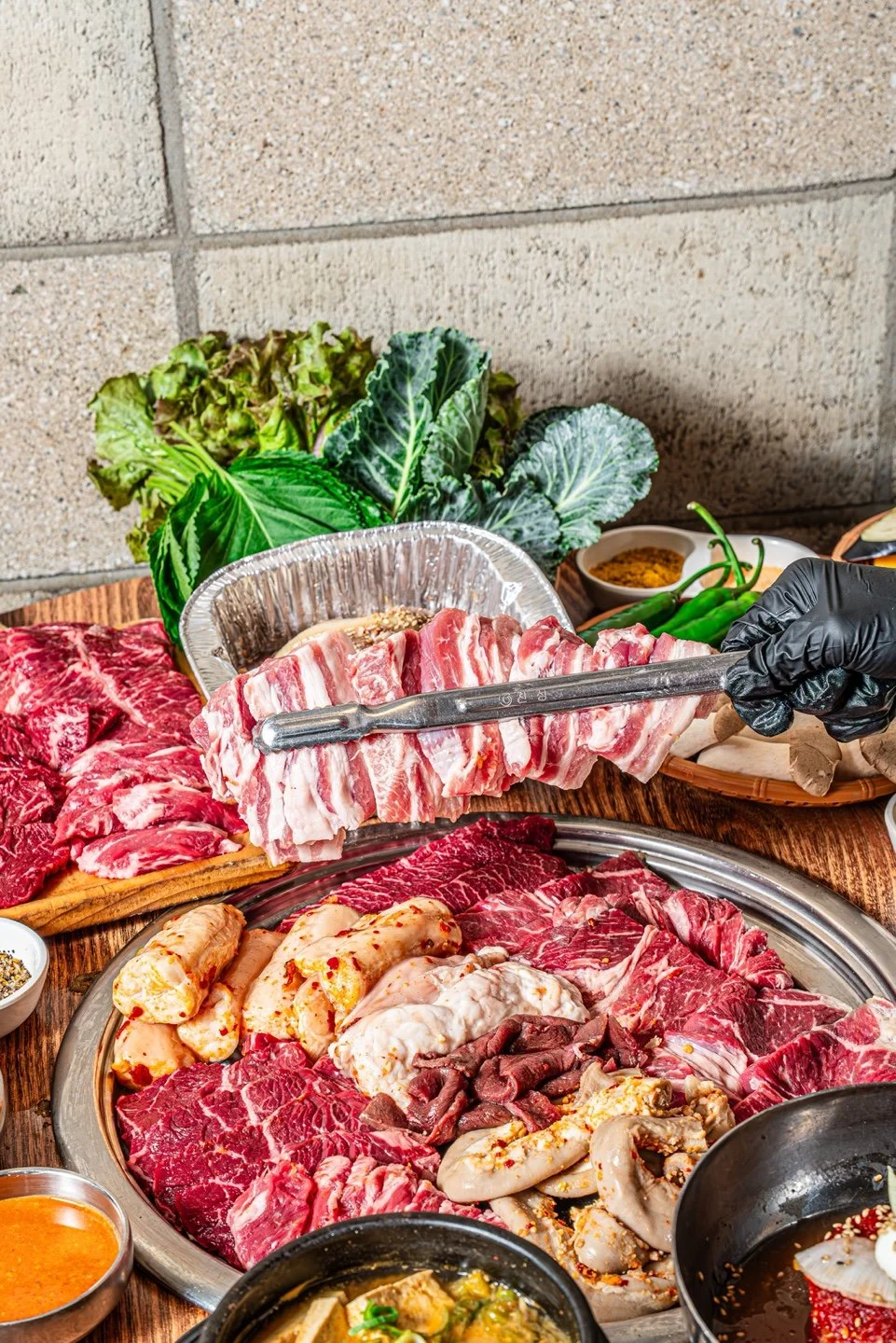
A Complete Korean BBQ Meat Guide for First-Time Visitors to Seoul
If you're planning your first Korean BBQ experience in Seoul, you've probably encountered three famous Korean dishes: samgyeopsal, galbi, and bulgogi.
They're among the most recognizable names in Korean cuisine, but if you've never tried them before, understanding the differences can be confusing.
Is samgyeopsal beef or pork? What's the difference between galbi and bulgogi? Which Korean BBQ meat is the most tender? And if you're visiting Seoul for the first time, which one should you order?
Although all three are popular Korean meat dishes, they offer completely different experiences in terms of flavor, texture, preparation, and how they're enjoyed.
Samgyeopsal is famous for its rich, juicy pork belly and crispy grilled edges. Galbi is known for its meaty rib texture and, in marinated versions, its sweet-savory flavor. Bulgogi is loved for its tender, thinly sliced beef coated in a flavorful Korean marinade.
The good news? You don't necessarily have to choose just one.
At Mongvely Korean BBQ in Myeongdong, visitors can explore different Korean BBQ meats, including pork belly, LA galbi, and beef bulgogi, through an all-you-can-eat dining experience in the heart of Seoul.
In this complete Korean BBQ meat guide, we'll explain the differences between samgyeopsal, galbi, and bulgogi, how each dish tastes, which sauces pair best with them, and how to decide what to eat during your next Korean BBQ meal in Myeongdong.
1. What Is Samgyeopsal (삼겹살)? Korea's Famous Grilled Pork Belly
Samgyeopsal, sometimes written as samgyupsal, is one of Korea's most recognizable BBQ dishes.
The Korean word "samgyeopsal" literally translates to "three-layered meat," referring to the visible layers of fat and lean meat found in pork belly.
Unlike Western-style bacon, traditional Korean samgyeopsal is generally served fresh rather than cured or smoked.
The pork belly is sliced, placed directly onto a hot grill, and cooked until the exterior becomes beautifully browned while the inside remains juicy.
What Does Samgyeopsal Taste Like?
Samgyeopsal has a rich, savory flavor that comes primarily from the pork itself rather than from a marinade.
As the pork belly cooks, the fat renders and helps create a crispy exterior.
This contrast between crisp edges and juicy meat is one of the reasons samgyeopsal is so popular.
Unlike bulgogi, which relies heavily on its marinade, samgyeopsal allows diners to customize each bite with different sauces and side dishes.
A piece of pork belly dipped in sesame oil and salt tastes completely different from the same piece wrapped in lettuce with ssamjang, garlic, and kimchi.
This variety makes samgyeopsal particularly enjoyable during longer Korean BBQ meals.
How Do Koreans Eat Samgyeopsal?
One of the most traditional ways to enjoy samgyeopsal is by making a ssam (쌈), or Korean lettuce wrap.
Here's how to create a classic Korean BBQ wrap:
Take a piece of lettuce or another available wrapping leaf.
Add one or two pieces of freshly grilled samgyeopsal.
Add a small amount of ssamjang, Korea's savory soybean-chili dipping paste.
Include grilled garlic, kimchi, or pickled vegetables.
Fold the lettuce around the ingredients.
Enjoy the combination in one bite.
The freshness of the vegetables balances the richness of the pork, while ssamjang and garlic add depth.
At Mongvely, guests can experiment with pork belly using the restaurant's sauce and salad bar, which includes a selection of Korean BBQ sauces and accompaniments.
Who Should Choose Samgyeopsal?
Samgyeopsal is a particularly good choice if:
You prefer pork over beef.
You enjoy crispy, caramelized meat.
You want to experience traditional Korean BBQ culture.
You enjoy building lettuce wraps.
You prefer choosing your own sauces rather than eating heavily marinated meat.
If you're visiting Seoul and want to experience the interactive, grill-at-your-table side of Korean BBQ, samgyeopsal is an excellent starting point.
Read more: What Is Samgyeopsal? The Ultimate Guide to Korea's Most Loved BBQ Pork Belly
2. What Is Galbi (갈비)? Korean BBQ Ribs Explained
Galbi literally means "rib" in Korean.
In Korean BBQ restaurants, galbi commonly refers to beef short ribs, although pork galbi is also popular.
Beef galbi is appreciated for its satisfying texture, rich beef flavor, and versatility.
Unlike samgyeopsal, which is made from pork belly, galbi comes from the rib section of the animal.
The meat may be served unseasoned or marinated, depending on the restaurant and preparation style.
One of the most recognizable versions is yangnyeom galbi (양념갈비), or marinated ribs.
A traditional Korean galbi marinade may contain soy sauce, garlic, sugar, onion, sesame oil, Korean pear, and other ingredients.
The result is a sweet-savory flavor that develops additional depth when grilled.
What Does Galbi Taste Like?
Galbi has a distinct beef-forward flavor.
When marinated, its surface develops a caramelized coating as the marinade cooks on the grill.
Compared with bulgogi, which is typically made from very thin slices of beef, galbi offers a more substantial bite.
The meat's texture depends on the cut, thickness, marbling, and cooking method.
Well-prepared galbi can be tender and juicy, while still retaining the satisfying structure associated with rib meat.
What Is LA Galbi (LA갈비)?
Visitors browsing Korean BBQ menus may encounter another term: LA galbi.
LA galbi is a particular style of beef short rib cut thinly across the bones.
Instead of having one long rib bone, the slices contain several small cross-sections of bone.
This is sometimes called a flanken-style cut.
Because the meat is relatively thin, LA galbi can cook more quickly than thicker rib preparations.
LA galbi is often served with a sweet-savory soy-based marinade, which caramelizes as the meat grills.
At Mongvely in Myeongdong, LA galbi is included in the restaurant's listed marinated beef selections, alongside beef bulgogi.
For tourists trying Korean beef BBQ for the first time, LA galbi offers an approachable way to enjoy marinated short ribs.
Just remember that the small pieces of bone are not edible. Separate the cooked meat from the bones before eating.
Who Should Choose Galbi?
Galbi is worth trying if:
Beef is your preferred meat.
You enjoy ribs or short ribs.
You like rich, savory flavors.
You want a more substantial texture than thinly sliced bulgogi.
You enjoy sweet-savory marinades with caramelized edges.
If samgyeopsal represents the classic pork BBQ experience, galbi offers a distinctly beef-focused alternative.
Read more: LA Galbi vs Galbi: What Is the Difference?
3. What Is Bulgogi (불고기)? Korea's Sweet and Savory Marinated Beef
Bulgogi is one of the most internationally recognized Korean dishes.
The word "bulgogi" translates to "fire meat," combining bul (fire) and gogi (meat).
Although there are different varieties, the most familiar type of bulgogi is prepared using thinly sliced beef marinated in a sweet-savory sauce.
The marinade often contains soy sauce, garlic, sugar, sesame oil, onion, and sometimes Korean pear.
Unlike galbi, which is defined primarily by the rib cut, bulgogi describes a preparation style.
It can be grilled, cooked in a pan, or prepared with vegetables and broth, depending on the dish.
What Does Bulgogi Taste Like?
Bulgogi is famous for its delicate balance of sweetness and savory flavor.
Its marinade creates a recognizable Korean BBQ taste without necessarily being spicy.
The thin slices of beef absorb the marinade and cook relatively quickly.
Because bulgogi is usually sliced thinly, it tends to have a softer texture than thicker cuts of rib meat.
This makes it especially approachable for visitors who are unfamiliar with Korean BBQ.
Bulgogi also pairs naturally with rice, allowing the marinade to become part of the overall meal.
Is Bulgogi Spicy?
Traditional soy-based beef bulgogi is generally not spicy.
Its dominant flavors are usually sweetness, soy sauce, garlic, and savory beef.
However, some variations use chili-based sauces, so it is worth checking the menu if you prefer to avoid spicy food.
For first-time visitors to Korea who are concerned about the heat associated with dishes like kimchi stew or spicy rice cakes, classic beef bulgogi is often a comfortable introduction to Korean flavors.
Bulgogi vs Regular Grilled Beef
Not all beef served at Korean BBQ restaurants is bulgogi.
For example, beef brisket, ribeye, and top blade can be grilled without the sweet marinade associated with bulgogi.
These cuts highlight the natural flavor of the beef.
Bulgogi, by comparison, emphasizes the relationship between the beef and its marinade.
At Mongvely, guests can compare beef bulgogi with unseasoned beef selections such as ribeye, rib meat, top blade, and beef brisket.
Trying both marinated and unmarinated beef is an effective way to appreciate the variety within Korean BBQ.
Who Should Choose Bulgogi?
Bulgogi is especially suitable if:
You prefer beef over pork.
You enjoy sweet-savory flavors.
You prefer tender, thinly sliced meat.
You are new to Korean food.
You enjoy pairing meat with rice.
You want a Korean BBQ dish that is generally mild rather than spicy.
If you're uncertain what to try during your first Korean BBQ meal in Seoul, bulgogi is one of the easiest dishes to start with.
Read more: What Is Bulgogi? A Complete Guide to Korea's Sweet-Savory BBQ Beef
4. Samgyeopsal vs Galbi vs Bulgogi: Which One Tastes Better?
There is no single winner because the three dishes appeal to different preferences.
The best Korean BBQ meat depends on whether you enjoy crispy textures, beefy richness, or marinated sweetness.
Which Korean BBQ Meat Is the Crispiest?
Samgyeopsal is usually the best choice for crispy texture.
Pork belly contains layers of fat that render during grilling, helping its exterior become golden and crisp.
Galbi can also develop caramelized edges, especially when marinated.
However, the texture is different from pork belly because galbi is usually valued for its meatiness rather than its crispy fat layers.
Bulgogi is generally softer and more tender, particularly when prepared from thinly sliced beef.
Which Korean BBQ Meat Is the Sweetest?
Bulgogi and marinated galbi are generally sweeter than plain samgyeopsal.
Bulgogi's recognizable flavor comes largely from its sweet-savory marinade.
Marinated galbi can offer a similar flavor profile, although the meatier rib texture makes the eating experience different.
Plain samgyeopsal, by contrast, is not naturally sweet in the same way.
You can add sweetness through dipping sauces, but the pork itself usually has a more straightforward savory flavor.
Which Korean BBQ Meat Is the Most Tender?
Bulgogi is often perceived as the easiest to chew because the beef is sliced very thinly.
However, tenderness depends on meat quality, cut, preparation, and cooking.
Properly prepared galbi can also be exceptionally tender.
Samgyeopsal has a different texture, combining soft fat with firmer lean pork and crisp grilled edges.
Which Korean BBQ Meat Is the Most Traditional?
All three have an established place in Korean cuisine.
Samgyeopsal is strongly associated with casual grilled pork meals shared among friends and family.
Galbi is widely enjoyed at family gatherings, celebrations, and beef BBQ restaurants.
Bulgogi is a long-established Korean meat dish commonly served at home and in restaurants.
Rather than asking which is the most authentic, consider what aspect of Korean food culture you want to experience.
For the classic lettuce-wrap BBQ ritual, samgyeopsal is particularly representative.
For Korean beef rib preparations, choose galbi.
For sweet-savory marinated beef, choose bulgogi.
5. Which Korean BBQ Meat Should First-Time Visitors to Seoul Order?
If you're visiting South Korea for the first time, our recommendation is simple: try more than one type of meat whenever possible.
Each dish introduces a different side of Korean BBQ.
A useful first-time tasting order would be:
First Round: Begin With Unmarinated Beef
Although this comparison focuses on three famous dishes, beginning with a simple cut of beef can help you appreciate the natural flavor of Korean BBQ.
At Mongvely, options such as ribeye, rib meat, top blade, and beef brisket offer a useful starting point.
Try the beef without sauce first, then add sesame oil and salt.
This allows you to experience the difference between the meat itself and the seasonings.
Second Round: Try Samgyeopsal
Next, grill a few pieces of pork belly.
Allow the meat to brown properly, then cut it into manageable portions.
Try one piece with sesame oil and salt.
For the next piece, create a lettuce wrap with ssamjang, garlic, and kimchi.
Notice how the vegetables and dipping sauce change the flavor.
This is one of the clearest examples of how Korean BBQ becomes more than simply eating grilled meat.
Third Round: Explore Beef Bulgogi
After experiencing the natural flavors of beef and pork, move on to bulgogi.
The sweet-savory marinade creates a noticeable contrast with plain grilled meat.
Try bulgogi with rice or a small amount of kimchi.
Because marinated meat can brown quickly, pay close attention to the grill.
Fourth Round: Finish With LA Galbi
Finally, try LA galbi.
Its rib texture and caramelized marinade provide a satisfying finish to the meat comparison.
Pair it with pickled vegetables or white kimchi to balance the richness.
The advantage of following this order is that you begin with simpler flavors before progressing to more strongly seasoned meats.
And if one cut becomes your favorite, you can return to it during your meal.
6. Best Korean BBQ Side Dishes and Sauces for Each Meat
Korean BBQ is not just about the meat.
The sauces, vegetables, and side dishes are equally important because they can dramatically change the flavor of each bite.
At Mongvely, our unlimited sauce and salad bar gives guests the opportunity to experiment with different combinations.
Best Sauces for Samgyeopsal
Pork belly pairs especially well with:
Sesame Oil and Salt: A classic Korean BBQ combination that highlights the flavor of grilled pork.
Ssamjang: A savory soybean-based dipping paste with mild spice, ideal for lettuce wraps.
Kimchi: Fermented vegetables provide acidity and spice that contrast with the richness of the meat.
White Kimchi: A milder, refreshing option for diners who prefer less spice.
Cheese Powder: A less traditional option available at Mongvely that adds a salty, creamy flavor.
For a classic samgyeopsal experience, start with sesame oil and salt before experimenting with stronger seasonings.
Best Sauces for Galbi
Because marinated galbi already contains seasoning, additional heavy sauces are not always necessary.
Instead, try pairing it with:
White Kimchi: Helps balance the richness and sweetness of marinated ribs.
Pickled Radish: Provides refreshing acidity between bites.
Lettuce Wraps: Add a fresh contrast to the beef.
Onion Sauce: Offers a tangy element that complements grilled meat.
For LA galbi, try the meat on its own first to appreciate the marinade before adding other accompaniments.
Best Sauces for Bulgogi
Bulgogi is already flavorful, so simple accompaniments often work best.
Rice: Complements the sweet-savory marinade and makes the meal more satisfying.
Lettuce: Gives the tender beef a fresh, crisp contrast.
White Kimchi: Adds gentle acidity without overpowering the marinade.
Pickled Vegetables: Help refresh the palate between sweeter bites.
Mongvely also offers distinctive seasonings such as curry powder, cumin, green tea salt, wasabi, garlic dipping sauce, and spicy teriyaki.
These allow diners to try combinations beyond the most familiar Korean BBQ flavors.
Read more: How to Eat Korean BBQ: Sauce Pairing Guide at Mongvely
7. How to Grill Samgyeopsal, Galbi, and Bulgogi Properly
One of the most memorable parts of eating Korean BBQ in Seoul is cooking the meat directly at your table.
However, each cut requires slightly different attention.
How to Grill Samgyeopsal
Pork belly benefits from enough time on the grill to develop a well-browned surface.
Place the slices on the grill without overcrowding them.
Allow the pork to brown before turning.
Use scissors and tongs to divide thicker pieces into bite-sized portions when appropriate.
Cook pork thoroughly before eating, then enjoy it with your preferred dipping sauce.
How to Grill Galbi
Galbi often contains a marinade that can caramelize quickly.
Place the meat on a properly heated grill and monitor the surface closely.
Turn it as needed to prevent excessive charring.
If you're eating LA galbi, be mindful of the small cross-cut bones.
Once the meat is safely cooked, separate it from the bones and enjoy it with rice or side dishes.
How to Cook Bulgogi
Bulgogi is generally thinly sliced, so it may cook more quickly than thick pork belly or beef ribs.
Depending on the restaurant, it may be cooked on a grill, in a pan, or on a specialized cooking surface.
If preparing it at the table, follow the restaurant's instructions, use the appropriate cooking equipment, and avoid leaving it unattended.
Because its marinade often contains sugar, bulgogi can brown quickly.
Important Korean BBQ Grilling Tips
Use separate utensils for handling raw and cooked meat.
Avoid overcrowding the grill, as this can make cooking less even.
Ask restaurant staff for assistance if you're unfamiliar with the cooking process.
Do not assume every type of meat requires the same grilling time.
And most importantly, take your time.
At Mongvely, guests enjoy a self-service, self-grill dining experience using charcoal grills. Our staff can assist with questions about the grilling process and grill plate changes.
8. Where Can You Try Samgyeopsal, LA Galbi, and Bulgogi in Myeongdong?
If you're visiting Seoul and want to compare different Korean BBQ meats without ordering several separate meat plates at different restaurants, an all-you-can-eat Korean BBQ restaurant can be a practical option.
Located in the heart of Seoul's Myeongdong shopping district, Mongvely Korean BBQ offers a selection of beef and pork cuts in a fixed-price dining format.
Rather than focusing on one meat, guests can explore different flavors and textures during the same meal.
Korean BBQ Meats Available at Mongvely
Our listed beef selections include:
Ribeye
Rib meat
Top blade
Spleen meat
牛胸肉
Beef bulgogi
LA 肋排
Our pork selections include:
Samgyeopsal (pork belly)
Moksal (pork neck)
Hangjeongsal (pork jowl)
Selected menu options also include beef intestines and other offal cuts for diners who want to try a wider variety of Korean BBQ.
This selection allows guests to compare unmarinated beef, marinated beef, and grilled pork within a single dining experience.
9. Why Myeongdong Is a Convenient Place to Try Korean BBQ in Seoul
Myeongdong is one of Seoul's most recognizable shopping and tourism districts.
Known for its skincare stores, K-beauty shopping, fashion boutiques, street food, department stores, and convenient subway connections, the neighborhood attracts visitors throughout the day.
After spending several hours shopping or exploring central Seoul, Korean BBQ provides an opportunity to sit down and enjoy a complete meal.
One advantage of Mongvely is its central location.
With two branches in Myeongdong, visitors can choose a location based on their sightseeing plans.
The main branch is convenient for travelers exploring Myeongdong Station and the surrounding shopping streets.
The second branch is convenient for those visiting Lotte Department Store, Euljiro-1-ga, and the northern side of Myeongdong.
Both Mongvely branches operate daily from 11:30 AM until 2:00 AM, with no regular afternoon break.
This means visitors can plan Korean BBQ for lunch, an afternoon meal, dinner, or late-night dining.
If you're searching for all-you-can-eat Korean BBQ in Myeongdong, Mongvely's combination of meat variety, fixed-price menus, sauce options, and central locations makes it worth considering.
Mongvely Main Branch
Address: 3F, 9 Myeongdong 8na-gil, Jung-gu, Seoul, South Korea
Korean Address: 서울 중구 명동8나길 9, 3층
Nearest Subway: Myeongdong Station, Line 4, Exit 6
Hours: Daily, 11:30 AM–2:00 AM
Phone: +82-2-318-2688
Mongvely Second Branch
Address: 2F, 44 Myeongdong 3-gil, Jung-gu, Seoul, South Korea
Korean Address: 서울 중구 명동3길 44, 2층
Nearest Subway: Euljiro-1-ga Station, Line 2, Exit 5
Hours: Daily, 11:30 AM–2:00 AM
Phone: +82-507-1415-5598
Smaller groups generally visit as walk-ins, subject to table availability. Advance reservation requests are available for groups of six or more at the second branch, subject to confirmation and restaurant policies.
Solo dining is possible at the second branch on a limited basis, subject to availability and time restrictions. Guests dining alone should contact the restaurant before visiting.
For complete information about locations, directions, and reservations, visit our Mongvely contact page.
10. Frequently Asked Questions: Samgyeopsal vs Galbi vs Bulgogi
What is the main difference between samgyeopsal, galbi, and bulgogi?
The primary differences are the type of meat, cut, and preparation.
Samgyeopsal is pork belly, typically grilled without marinade.
Galbi refers to ribs, commonly beef short ribs, and can be served marinated or unseasoned.
Bulgogi usually consists of thinly sliced beef marinated in a sweet-savory Korean sauce.
Is samgyeopsal beef or pork?
Samgyeopsal is pork belly, not beef.
It is recognizable by the layers of lean meat and fat that become juicy and crisp during grilling.
It is commonly enjoyed with lettuce wraps, ssamjang, garlic, and kimchi.
Is galbi the same as bulgogi?
No.
Although both dishes can feature sweet-savory beef marinades, galbi refers to rib cuts, while bulgogi describes a marinated meat preparation, typically using thinly sliced beef.
Galbi generally has a more substantial rib texture, while bulgogi is usually softer and thinner.
What is the difference between galbi and LA galbi?
LA galbi is a particular style of short rib cut thinly across the bones.
Traditional galbi may be cut along the rib bones or prepared in other ways.
Both can be marinated or grilled, but LA galbi is especially recognizable by the small bone sections running across each slice.
Which Korean BBQ meat is best for beginners?
Bulgogi is an excellent option for beginners because it is usually tender, mild, and sweet-savory.
However, samgyeopsal is ideal for experiencing classic Korean table grilling and lettuce wraps.
LA galbi is another approachable option for visitors who enjoy beef ribs.
Which Korean BBQ meat is not spicy?
Plain samgyeopsal and traditional soy-based bulgogi are generally not spicy.
Marinated galbi is also commonly sweet-savory rather than spicy.
However, sauces and marinades vary, so guests should check the specific preparation.
Is samgyeopsal healthier than bulgogi?
Neither dish is automatically healthier.
Samgyeopsal is a fatty pork cut and can be relatively high in saturated fat.
Bulgogi provides beef protein, but its marinade may contain added sugar and sodium.
The nutritional profile depends on the meat cut, portion size, preparation method, sauces, and accompaniments.
Choosing appropriate portions and including vegetables can help create a more balanced meal.
Is Korean BBQ always made with beef?
No.
Korean BBQ includes pork, beef, chicken, and other meat preparations.
Samgyeopsal and moksal are popular pork choices, while galbi, bulgogi, ribeye, and beef brisket are examples of beef selections.
Different restaurants specialize in different meats.
Can I try samgyeopsal, bulgogi, and LA galbi at one restaurant in Myeongdong?
Yes.
Mongvely Korean BBQ lists all three among its meat selections, along with other beef and pork cuts.
Its all-you-can-eat format allows diners to explore multiple Korean BBQ styles during one meal.
How much does all-you-can-eat Korean BBQ cost in Myeongdong?
Prices depend on the restaurant and menu.
At Mongvely, all-you-can-eat Korean BBQ currently starts from ₩31,700 per person, with additional menu options costing up to ₩42,700.
Guests should always confirm the latest prices and inclusions before visiting.
Do I need a reservation for Korean BBQ in Myeongdong?
Not always.
At Mongvely, smaller groups generally visit without reservations, subject to seating availability.
Advance reservations are available for qualifying groups of six or more at the second branch, subject to confirmation.
During popular dining hours, walk-in guests may need to wait.
Is Mongvely Korean BBQ halal?
No.
Mongvely is not halal-certified and serves pork alongside beef.
The restaurant cannot guarantee halal preparation or the absence of cross-contact.
Guests with strict dietary or allergy requirements should review the menu and speak with the restaurant before dining.
Final Verdict: Should You Choose Samgyeopsal, Galbi, or Bulgogi?
When comparing samgyeopsal vs galbi vs bulgogi, the best choice ultimately depends on your personal taste.
If you love rich, juicy pork with crispy edges, samgyeopsal is the classic Korean BBQ experience.
If you enjoy flavorful beef ribs with a satisfying, meaty texture, galbi is worth trying.
If you prefer tender beef coated in a sweet-savory marinade, bulgogi is an excellent introduction to Korean cuisine.
But for first-time visitors to Seoul, our recommendation is to experience more than one.
The real appeal of Korean BBQ is discovering how different cuts, grilling methods, sauces, and side dishes come together.
At Mongvely Korean BBQ in Myeongdong, you can compare samgyeopsal, LA galbi, bulgogi, and other beef and pork selections during an all-you-can-eat Korean BBQ meal.
Whether you're exploring Seoul with friends, shopping in Myeongdong, or planning your first Korean food experience, there's no better way to discover your favorite BBQ meat than by tasting the differences yourself.
Discover Korean BBQ in Myeongdong at Mongvely.
Explore our Korean BBQ menu and prices, find your nearest Mongvely branch, and plan your next meal in Seoul.
MONGVELY — All-You-Can-Eat Korean BBQ in Myeongdong, Seoul.
