

August in Seoul Travel Guide: Weather, What to Wear, Airport to Accommodation, and Practical Summer Tips
August in Seoul is hot, humid, busy, bright, sometimes rainy, and very rewarding when planned properly. It is not the easiest month for long outdoor sightseeing, but it can still be a great time to experience the city if the itinerary is built around weather, transportation, indoor breaks, and realistic timing.
The biggest mistake people make in August is planning Seoul like it is spring or autumn. Seoul in August needs a different strategy. You should not walk across five neighborhoods in one day, stand outside during the hottest hours, or leave dinner planning until everyone is exhausted. A good August plan is built around short outdoor routes, indoor cooling stops, practical subway exits, evening activities, and meals near your final area of the day.
This guide explains what August weather in Seoul feels like, what to wear, what to pack, how to get from the airport to your accommodation, which areas are easiest to stay in, what to do during hot or rainy days, and how to plan meals without wasting energy. It is written from a trip-planning perspective, so the focus is not only “where to go,” but how to move through Seoul comfortably.
What Is Seoul Weather Like in August?
August is usually one of the hottest and most humid months in Seoul. The actual temperature matters, but the humidity is what makes the city feel heavier. Even a short walk from a subway station to a hotel can feel tiring if you are carrying luggage or wearing the wrong clothes.
Expect warm mornings, hot afternoons, humid evenings, and occasional rain. The main rainy season usually begins earlier in summer, but August can still have sudden showers, cloudy humid days, and heavy rain depending on the forecast. Do not assume every day will be clear just because it is summer.
A good August mindset is simple: prepare for heat first, rain second, and walking fatigue always.
Seoul is very convenient, but it still requires walking. Subway stations can be large. Transfers can be long. Some exits have stairs. Popular areas like Myeongdong, Hongdae, Gwangjang Market, Bukchon, Seongsu, Gangnam, and Jamsil involve more walking than expected. In August, that walking feels harder.
The best August plan is not the one with the most attractions. It is the one that protects your energy until evening.
Is August a Good Time to Visit Seoul?
August can be a good time to visit Seoul if the trip is planned correctly. The city stays lively, shopping areas are active, cafes are easy to find, late-night dining works well, and summer foods like cold noodles, bingsu, iced drinks, and Hangang ramyeon feel seasonal.
The trade-off is comfort. August is not the best month for long palace walks at noon, uphill walks in Bukchon, long outdoor queues, or packed schedules with too many subway transfers. It is better for travelers who can adapt: go out early, cool down in the afternoon, and enjoy the city again after sunset.
Seoul is often at its best at night in August. Myeongdong becomes brighter, Namsan views feel better, Cheonggyecheon becomes calmer, Hangang parks are more enjoyable, and late dinners make more sense.
What to Wear in Seoul in August
Wear breathable clothing that can handle sweat, humidity, and sudden rain. Light cotton, linen blends, loose shirts, shorts, skirts, summer dresses, and moisture-wicking fabrics are practical. Avoid heavy denim if you plan to walk a lot.
Comfortable shoes are more important than stylish shoes. Seoul has subway stairs, uneven sidewalks, long underground passages, and sloped areas. New shoes are a bad idea in August because sweat and rain can quickly cause blisters.
A light outer layer may still be useful indoors. Cafes, buses, subway cars, shopping malls, and department stores can be strongly air-conditioned. If you get cold easily, carry a thin shirt or light cardigan.
For beauty and grooming, keep expectations realistic. August humidity can affect hair and makeup quickly. Lighter makeup, blotting paper, sunscreen, and hair clips are more useful than trying to maintain a perfect look all day outdoors.
What to Pack for Seoul in August
A compact umbrella is essential. It helps with sudden rain and can also be used for sun protection. A portable fan is useful, especially while waiting outside, walking through markets, or standing on subway platforms. A small towel or handkerchief is also helpful because you will probably sweat.
Pack sunscreen, a portable charger, comfortable shoes, a reusable shopping bag, and a small pouch for essentials. If you plan to shop in Myeongdong, Seongsu, Hongdae, or department stores, a reusable bag is much easier than carrying several small paper bags in humid weather.
A practical August packing list includes:
Compact umbrella
Sunscreen
Portable fan
Small towel or handkerchief
Comfortable walking shoes
Portable charger
Reusable shopping bag
Light clothing
Thin outer layer for air-conditioned places
Water bottle or easy access to drinks
Backup indoor plan saved on your map
Do not overpack your day bag. Carrying too much in August makes the day harder.
How to Get From Incheon Airport to Your Accommodation
Getting from Incheon Airport to your accommodation is one of the most important parts of planning Seoul in August. After a flight, immigration, luggage pickup, and the summer humidity, the easiest route is often better than the cheapest route.
There are three main options: AREX train, airport limousine bus, and taxi.
Option 1: AREX Train
AREX connects Incheon Airport with Seoul Station and other stops along the Airport Railroad line. There are two main types: Express Train and All-Stop Train.
The Express Train goes directly between Incheon Airport and Seoul Station. This is useful if your accommodation is near Seoul Station, Myeongdong, City Hall, or another area easily reached from Seoul Station by subway or taxi.
The All-Stop Train stops at stations such as Hongik University, Gongdeok, Digital Media City, and Seoul Station. This is often useful if you are staying in Hongdae, Mapo, Gongdeok, or areas connected to those stations.
Choose AREX if you want a route that avoids road traffic. It is practical, reliable, and often better during rush hour. The downside is that you may need to transfer with luggage, which can be tiring in August.
If you are carrying large suitcases, check whether your final station has elevators or escalators near the right exit.
Option 2: Airport Limousine Bus
Airport limousine buses are often the easiest option if the bus stops near your hotel. This is especially convenient for areas like Myeongdong, Namdaemun, Dongdaemun, Gangnam, Hongdae, and major hotel zones.
The advantage of the airport bus is that you can store luggage underneath and avoid subway transfers. The disadvantage is traffic. Travel time can become longer during rush hour, rain, accidents, or busy travel periods.
For first arrival in August, the airport bus is often more comfortable than dragging luggage through subway transfers, especially if the stop is close to your accommodation.
Before boarding, check your route number, terminal stop, bus stop location, and whether you need to buy a ticket in advance at the airport. Bus boarding procedures can differ depending on terminal and route.
Option 3: Taxi
Taxi is the easiest but most expensive option. It can be useful if you arrive late, have heavy luggage, are traveling with several people, or your accommodation is far from a convenient train or bus stop.
From Incheon Airport to central Seoul, taxi travel time depends heavily on traffic. To Myeongdong, expect roughly around 80–90 minutes depending on road conditions. Fare depends on taxi type, time, distance, tolls, and traffic.
Taxi is convenient, but do not assume it will always be faster than the train. During traffic, AREX can be more predictable.
Which Airport Transfer Is Best by Area?
Myeongdong
For Myeongdong, airport limousine bus is often the easiest if your hotel is near a bus stop. AREX to Seoul Station plus subway or taxi is also practical. Taxi is convenient with luggage but costs more.
Hongdae
For Hongdae, AREX All-Stop Train to Hongik University Station is usually one of the most practical options. Airport bus can also work depending on your accommodation.
Seoul Station
For Seoul Station, AREX Express Train is one of the most direct options. Taxi can work if you have heavy luggage, but traffic may make it less efficient.
Jongno, Anguk, Insadong, Ikseon-dong
For Jongno or Anguk, you may need an airport bus, AREX plus subway transfer, or taxi depending on your exact accommodation. Check the nearest station and elevator access before choosing.
Gangnam
For Gangnam, airport limousine bus is often comfortable because subway transfers from Incheon can be long. Taxi is convenient but can be expensive and traffic-sensitive.
Jamsil
For Jamsil, airport bus is usually more comfortable than multiple subway transfers. Taxi is possible but expensive.
First-Day Arrival Tips for August
Do not plan too much on your arrival day. August heat and humidity can feel stronger after a flight. The better plan is to reach your accommodation, shower, rest, eat nearby, and keep the evening simple.
If you arrive in the afternoon, avoid starting with a long outdoor route. Choose a nearby dinner, short shopping walk, or cafe. If you are staying in Myeongdong, a light shopping walk and dinner nearby is enough. If you are staying in Hongdae, keep the evening around Hongdae or Yeonnam. If you are staying in Gangnam, stay around COEX, Sinsa, or your hotel area.
The first day should help you adjust, not exhaust you.
Best Areas to Stay in Seoul in August
Myeongdong
Myeongdong is one of the most practical areas in August because it is central and convenient. Shopping, cafes, restaurants, hotels, subway stations, beauty stores, street food, Namsan, Euljiro, Cheonggyecheon, and City Hall are all close.
For August, this convenience matters. You can take breaks, return to your accommodation, drop shopping bags, and eat late without crossing the city.
Hongdae
Hongdae is good for nightlife, cafes, shopping, casual food, and a younger atmosphere. It is also convenient for AREX airport access through Hongik University Station.
Hongdae is best for people who want lively evenings and do not mind crowds.
Jongno and Anguk
Jongno, Anguk, and Insadong are good for palaces, hanok streets, traditional shops, tea houses, galleries, and cultural routes. These areas are beautiful, but August heat makes timing important. Start early and avoid long outdoor walks at midday.
Gangnam
Gangnam is useful for COEX, clinics, modern shopping, restaurants, Jamsil, Apgujeong, Sinsa, and business areas. It is polished and convenient, but not always the best base for central Seoul sightseeing.
Seoul Station
Seoul Station is practical for airport transfers, KTX, and moving between cities. It is convenient, but the immediate area may feel less atmospheric than Myeongdong, Hongdae, or Jongno.
How to Plan Your Seoul Days in August
The best August Seoul itinerary follows a rhythm:
Morning: outdoor sightseeing
Afternoon: indoor shopping, cafe, museum, mall, or hotel rest
Evening: outdoor walk, night view, river, shopping street, or dinner
This structure works because it avoids the worst heat. It also keeps energy for the evening, which is when Seoul feels more enjoyable in summer.
Do not plan Gyeongbokgung, Bukchon, Namsan, Seongsu, Hangang, and Hongdae all in one day. It may look possible on a map, but August will make it tiring.
Plan by area instead.
Best Things to Do in Seoul in August
1. Visit Palaces Early
Gyeongbokgung and Changdeokgung are worth visiting, but go early. Palace grounds can feel hot and exposed in August. Bring water, sunscreen, and an umbrella.
Pair Gyeongbokgung with Bukchon, Insadong, or Ikseon-dong, but keep the route reasonable.
2. Shop and Rest in Myeongdong
Myeongdong is very useful in August because shops, cafes, restaurants, and subway stations are close together. It is also good for buying sunscreen, cooling products, skincare, clothes, snacks, and travel essentials.
Myeongdong is better in the evening than midday because the street energy becomes stronger after sunset.
3. Visit Namsan Near Sunset
Namsan and N Seoul Tower are better in late afternoon or evening in August. Midday can be too hot, especially if walking uphill.
A practical route is Myeongdong shopping, Namsan sunset, then dinner nearby.
4. Use COEX on Hot or Rainy Days
COEX is one of the best indoor options in Seoul. It has shopping, food, cafes, exhibitions, Starfield Library, and nearby Bongeunsa Temple.
On days with heavy rain or heatwave warnings, COEX is a smart plan.
5. Enjoy Hangang in the Evening
The Han River is best in the evening in August. Yeouido, Banpo, Ttukseom, and Nanji all have different atmospheres. Do not go at midday unless you are prepared for strong heat.
Hangang ramyeon, cold drinks, short walks, and sunset views all work better after the sun gets lower.
6. Plan Seongsu With Cafe Breaks
Seongsu is good for cafes, pop-ups, fashion, bakeries, and lifestyle shops. Seoul Forest is nearby, but in August, do the park early or keep the walk short.
Use cafes as real breaks, not just quick photo stops.
7. Keep Markets Short
Gwangjang Market and Namdaemun Market can be fun, but they can feel hot and crowded in August. Go with a short food plan instead of wandering for hours.
Choose a few foods, eat, and move somewhere cooler.
What to Eat in Seoul in August
August food should help you recover from the heat. Good choices include cold noodles, Korean BBQ, bingsu, iced drinks, soybean paste stew, soup dishes, Hangang ramyeon, and simple rice meals.
Cold noodles are especially useful after walking. Korean BBQ works well at night when you want a full sit-down meal. Bingsu and cafes are good for breaks, but they should not replace proper meals every day.
Street food is fun, especially in Myeongdong, but be careful not to fill up only on fried or sweet snacks while walking. A real dinner makes the day easier.
Where Mongvely Fits Into an August Seoul Plan
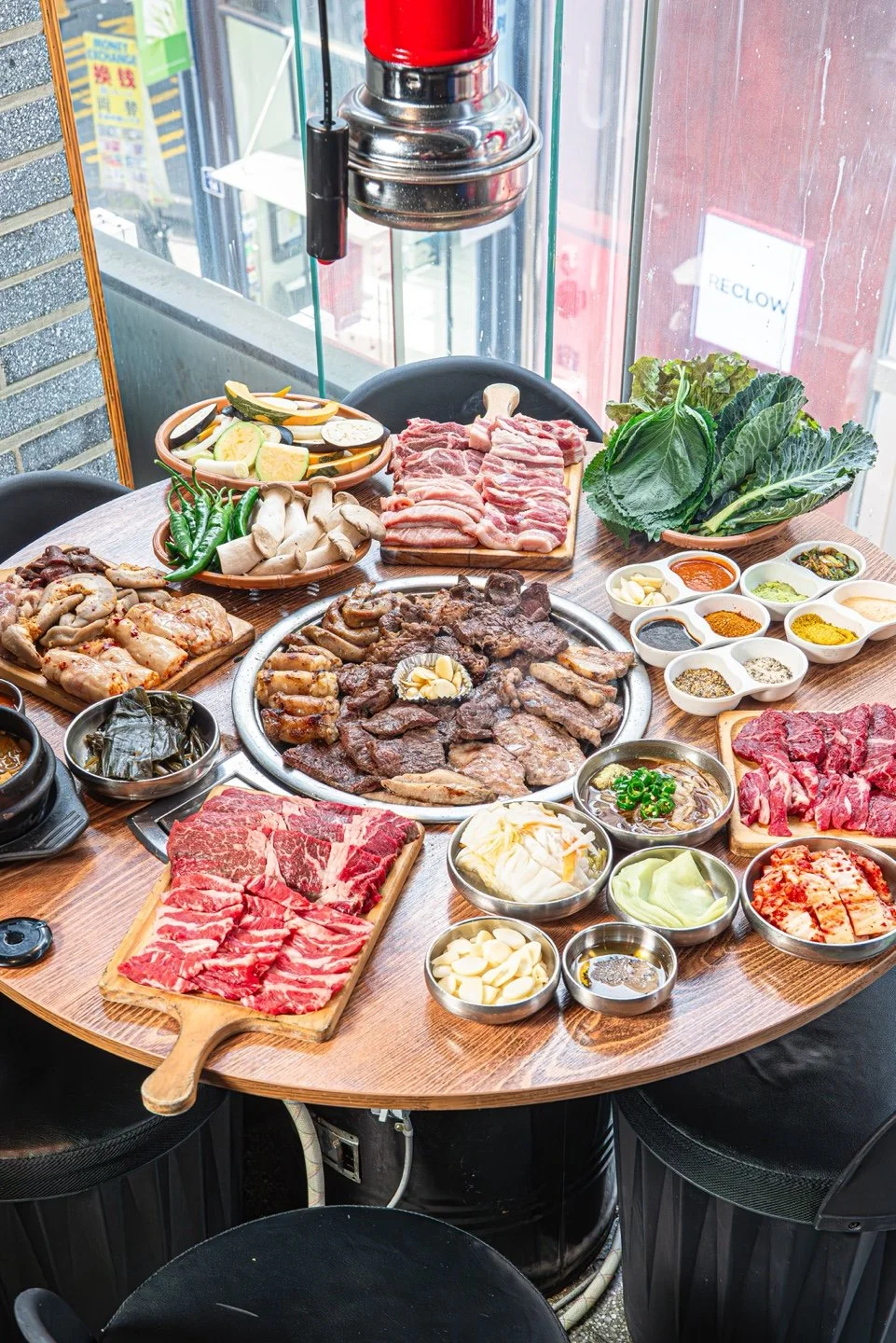
If your day ends near Myeongdong, Mongvely can be a convenient dinner stop after shopping, Namsan, Cheonggyecheon, hotel check-in, or a late arrival in central Seoul. Mongvely is an all-you-can-eat Korean BBQ restaurant with beef, pork, banchan, sauces, vegetables, table grilling, and an in-store Hangang-style ramen machine.
Because Mongvely is open daily from 11:30 AM to 2:00 AM, it can fit lunch, dinner, or late-night plans. In August, this flexibility matters because heat, rain, and long walking days can easily change your schedule.
Heat and Rain Safety Tips
Take Seoul’s August weather seriously. Drink water regularly, rest indoors, avoid long outdoor walks during peak heat, and do not ignore dizziness, nausea, headache, unusual weakness, or confusion.
If the weather app shows a heatwave warning, move outdoor plans to morning or evening. Use malls, cafes, museums, department stores, and hotel rest during the hottest hours.
For rain, keep a compact umbrella in your bag. If heavy rain starts, do not force outdoor attractions. Change the plan to Myeongdong shopping, COEX, museums, cafes, department stores, underground shopping, or a meal nearby.
A flexible plan is not a weak plan. In August, flexibility is what makes Seoul enjoyable.
Sample 3-Day August Seoul Itinerary
Day 1: Arrival, Myeongdong, and Easy Dinner
Arrive at Incheon Airport, take AREX, airport bus, or taxi to your accommodation, then keep the day simple. If staying in Myeongdong, shop lightly, buy essentials, and eat dinner nearby.
Do not schedule major sightseeing on arrival day unless your flight is early and you are well rested.
Day 2: Palace, Insadong, Cheonggyecheon, and Namsan
Start early at Gyeongbokgung Palace. Continue to Bukchon or Insadong, then take an indoor lunch and cafe break. In the late afternoon, walk a short section of Cheonggyecheon or rest at the hotel. Visit Namsan near sunset, then eat dinner in Myeongdong or nearby.
This route keeps the day central and avoids unnecessary transfers.
Day 3: Seongsu, Seoul Forest, and Hangang
Start at Seoul Forest if the weather is manageable. Move into Seongsu for cafes, pop-ups, and shopping. Rest indoors during the hottest hours. In the evening, visit Ttukseom Hangang Park or another river area for sunset.
If the forecast is bad, switch this day to COEX, Starfield Library, Bongeunsa, and Jamsil.
Common Mistakes to Avoid in August
The first mistake is planning too many neighborhoods in one day. Seoul is large, and August makes transfers more tiring.
The second mistake is wearing bad shoes. This can ruin the trip faster than almost anything else.
The third mistake is skipping meals and surviving only on coffee and snacks. In the heat, proper meals matter.
The fourth mistake is choosing accommodation only by price. A cheaper place far from subway lines can cost more in time and energy.
The fifth mistake is ignoring airport transfer planning. After a long flight, luggage plus August humidity can make a complicated route miserable.
The sixth mistake is treating indoor plans as wasted time. In August, indoor breaks are part of good planning.
Final Thoughts: August in Seoul
August in Seoul is hot and humid, but it can still be a strong travel month if the trip is planned with care. The city has late-night energy, excellent shopping, strong cafe culture, good public transportation, summer foods, river views, and many indoor options.
The key is to protect your energy. Choose accommodation carefully, plan the airport transfer before landing, start outdoor sightseeing early, rest indoors in the afternoon, go back out in the evening, and eat proper meals near your final stop.
Seoul rewards people who plan by area instead of chasing every famous place. In August, that matters even more.
A good August Seoul trip should feel active but not exhausting, flexible but not careless, and full but not rushed. Plan around the weather, and the city becomes much easier to enjoy.
FAQ: August in Seoul Travel Guide
Is August a good time to visit Seoul?
August can be a good time to visit Seoul if you plan around heat, humidity, and possible rain. Morning sightseeing, indoor afternoon breaks, evening walks, and proper meals work best.
Is Seoul hot in August?
Yes. August is usually one of the hottest and most humid months in Seoul. The humidity can make walking feel more tiring than the temperature number suggests.
Does it rain in Seoul in August?
Yes, rain is possible in August. The main rainy season usually begins earlier in summer, but sudden showers and humid cloudy days can still happen.
What should I wear in Seoul in August?
Wear breathable clothing, comfortable walking shoes, and light fabrics. Avoid heavy denim and new shoes. Carry a light outer layer if you get cold in air-conditioned places.
What should I pack for Seoul in August?
Pack sunscreen, a compact umbrella, portable fan, small towel, comfortable shoes, portable charger, reusable shopping bag, and light summer clothes.
How do I get from Incheon Airport to my accommodation in Seoul?
The main options are AREX train, airport limousine bus, and taxi. AREX is good for avoiding traffic, airport bus is convenient if it stops near your hotel, and taxi is easiest with heavy luggage but more expensive.
Is AREX or airport bus better?
AREX is better if your accommodation is near Seoul Station, Hongdae, Gongdeok, or another Airport Railroad stop. Airport bus is better if it stops close to your hotel and you want less walking with luggage.
What is the best area to stay in Seoul in August?
Myeongdong is one of the most practical areas in August because shopping, restaurants, cafes, hotels, subway stations, and late-night food are close together. Hongdae, Jongno, Anguk, Gangnam, and Seoul Station can also work depending on your route.
What should I do on my first day in Seoul?
Keep the first day simple. Go to your accommodation, rest, buy essentials, eat nearby, and avoid planning too many outdoor activities after a long flight.
What are the best things to do in Seoul in August?
Good August plans include early palace visits, Myeongdong shopping, Namsan near sunset, COEX on hot or rainy days, Seongsu cafes, Hangang in the evening, and short market food stops.
What should I eat in Seoul in August?
Good August foods include cold noodles, Korean BBQ, bingsu, iced drinks, soybean paste stew, Hangang ramyeon, soup dishes, and light street food.
Is Korean BBQ too heavy in August?
Korean BBQ can work well at night, especially when balanced with banchan, lettuce wraps, kimchi, pickled sides, cold noodles, and drinks.
Where can I eat in Myeongdong after a long August day?
Mongvely is an all-you-can-eat Korean BBQ restaurant in Myeongdong with beef, pork, banchan, sauces, vegetables, table grilling, and an in-store Hangang-style ramen machine.
What time is Mongvely open?
Mongvely is open daily from 11:30 AM to 2:00 AM.
What should I avoid in Seoul in August?
Avoid long outdoor walks during peak heat, overpacked itineraries, uncomfortable shoes, too many distant neighborhoods in one day, and skipping proper meals.
How should I plan a Seoul itinerary in August?
Plan outdoor activities in the morning, indoor breaks in the afternoon, evening activities after sunset, and dinner close to your final stop.
Is taxi from Incheon Airport to Seoul worth it?
Taxi can be worth it if you have heavy luggage, arrive late, or travel with a group. However, it is more expensive and can be affected by traffic.
What is the most important August Seoul travel tip?
Plan by area and protect your energy. Seoul is easier in August when you reduce transfers, avoid midday heat, stay hydrated, and keep indoor backup plans ready.
Visit Us Now!
Mongvely Main Branch
Address: Myeongdong 8na-gil 9 3rd Floor
Opening Hours: 11:30 a.m. to 2:00 a.m.
Mongvely 2nd Branch
Address: Myeongdong 3-gil 44 2nd Floor
Opening Hours: 11:30 a.m. to 2:00 a.m.
Plan your visit → Book a Table
Follow us on Instagram → @kbbqmongvely
