

Autumn/Fall in Seoul 2026: A Local’s Guide to Weather, Fall Foliage, What to Wear & Things to Do
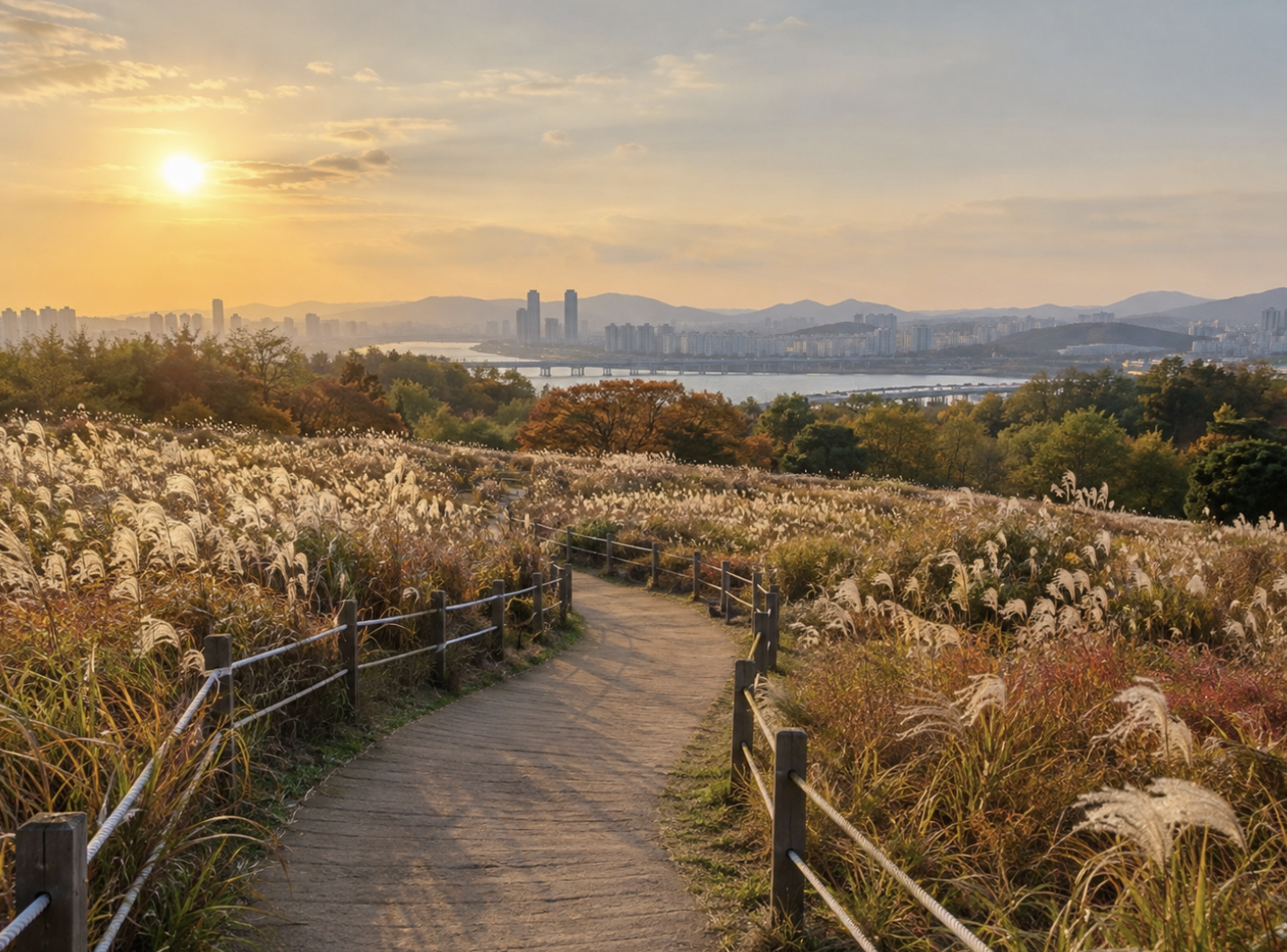
There is a point every year when Seoul suddenly stops feeling like summer.
It does not happen on the first day of September, and it definitely does not arrive the moment cafes start selling autumn drinks. In early September, the afternoons can still feel warm, the subway can still feel humid, and people are often dressed almost exactly as they were in August.
Then one evening, the air changes.
You walk out after dinner and realize you could use a light jacket. The sky seems clearer. People start spending longer outside instead of immediately looking for air conditioning. Tables appear outside cafes again. The mountains surrounding Seoul begin to look sharper in the distance. A few yellow leaves appear along sidewalks, and suddenly everyone starts talking about 단풍 — danpung, autumn foliage.
That transition is one of my favorite things about autumn in Seoul.
For travelers, fall in Seoul is often marketed through pictures of bright red maple trees and yellow ginkgo streets. Those scenes are real, but autumn here is about much more than foliage. It is the season when the city becomes genuinely pleasant to explore on foot. You can spend an afternoon walking between neighborhoods without feeling defeated by humidity, eat outside without freezing, climb a small mountain without regretting the decision halfway up, and stay out into the evening because the temperature actually makes you want to keep walking.
If you are planning a trip between September and November, this is how I would approach fall in Seoul from a local perspective: less rushing between landmarks, more neighborhood walks, fewer overly packed itineraries, and much more attention to timing.
➣ READ ALSO : The Ultimate Guide to Korean BBQ in Seoul
When Is Autumn in Seoul?
Officially, Seoul’s autumn season runs from September through November.
But those three months do not feel remotely the same.
September: Seoul Is Leaving Summer Behind
September is transitional.
Early September can still feel surprisingly summery. You may be wearing short sleeves at lunch, drinking iced coffee and wondering why everyone keeps calling it fall.
By the second half of the month, mornings and evenings usually become more comfortable. Walking gets easier, and the heavy summer atmosphere starts disappearing.
Do not visit Seoul in September expecting streets full of red leaves. Most trees are still green.
Instead, think of September as the beginning of good walking weather.
It is a great time for:
Myeongdong and Euljiro walks
Palace neighborhoods
Cheonggyecheon
Seongsu cafe hopping
Han River evenings
Namsan
Outdoor markets
Rooftop cafes
Long shopping days without peak-summer exhaustion
October: The Best All-Round Autumn Month
If someone asked me to choose one month for a first trip to Seoul, October would be difficult to beat.
Days are usually comfortable, nights become cooler, and the city gradually starts changing color.
October is when Seoul really begins looking like autumn.
You start seeing yellow ginkgo leaves around older streets and palace areas. Mountains surrounding the city begin changing. Parks become busier on weekends because locals know the comfortable weather does not last forever.
It is also prime walking season.
This is when I would spend less time underground in the subway and more time walking between nearby neighborhoods.
November: Peak Color, Then the Fast Move Toward Winter
Early November can be spectacular.
For 2026, the official foliage forecast expects Bukhansan to reach peak color around November 4, although actual conditions can shift depending on weather.
This is usually around the period when Seoul's autumn colors become particularly impressive.
But November changes quickly.
A sunny afternoon may still feel perfect for walking, while the temperature after sunset can remind you that winter is close. Toward the second half of November, leaves begin disappearing and padded jackets start appearing everywhere.
If fall foliage is your priority, I would personally aim for late October through the first part of November, while keeping your dates slightly flexible.
What Fall in Seoul Actually Feels Like
One thing travel photos do not show very well is how much autumn changes everyday life in Seoul.
In July and August, people often plan around heat.
You choose air-conditioned malls. You avoid hills at 2 PM. You take taxis for distances you would normally walk. Cafe breaks become survival breaks.
In autumn, that disappears.
Suddenly, walking from Gwanghwamun to Deoksugung, continuing toward Cheonggyecheon, then finishing the evening around Euljiro or Myeongdong does not feel ambitious.
It just feels like a normal day.
Seoul is an extremely walkable city when the weather cooperates, and fall is when that becomes obvious.
My biggest recommendation is therefore simple:
Do not plan autumn in Seoul entirely around destinations. Plan around neighborhoods.
You will experience more of the city.
A Local Rule: Stop Crossing Seoul Five Times a Day
One of the most common mistakes we see in Seoul itineraries is something like this:
Morning in Bukchon.
Lunch in Gangnam.
Cafe in Seongsu.
Shopping in Hongdae.
Dinner in Myeongdong.
Technically possible? Yes.
Enjoyable? Probably not.
Seoul is enormous. Subway transportation is efficient, but transfers, station walking, stairs and waiting add up.
Autumn is the perfect season to build slower neighborhood days.
Instead, do something like:
Gyeongbokgung → Seochon → Gwanghwamun → Deoksugung → Cheonggyecheon → Euljiro
Or:
Seoul Forest → Seongsu → Ttukseom
Or:
Myeongdong → Namsan → Myeongdong Cathedral → Euljiro
The second type of itinerary feels much more like actually being in Seoul rather than constantly traveling underneath it.
Where Locals Actually Enjoy Autumn in Seoul
You do not necessarily need to travel outside Seoul for good autumn scenery.
Some of the best fall experiences are inside the city.
Namsan: The Obvious Choice That Is Actually Worth It
Locals sometimes avoid places simply because they are famous, but Namsan in autumn deserves its reputation.
The mountain sits right in central Seoul, which means you get a combination that is surprisingly difficult to find elsewhere: forest, fall foliage and a dense city skyline in the same view.
Namsan has several designated autumn walking paths, and the southern walking route is especially known for its autumn trees.
My advice is not to rush directly to N Seoul Tower.
The walk itself is the point.
Go in the afternoon, take your time, and let sunset arrive while you are somewhere on the mountain.
If you are staying in Myeongdong, Namsan is one of the easiest ways to add nature to a city-heavy itinerary without losing half a day to transportation.
Deoksugung and Jeong-dong: One of My Favorite Central Seoul Fall Walks
For a more urban autumn experience, I would choose Deoksugung Stonewall Walkway and Jeong-dong.
This part of Seoul feels completely different from the neon streets people usually associate with the city.
You have stone walls, mature trees, historic buildings, quiet side streets and cafes hidden behind larger roads.
The ginkgo and maple trees around Deoksugung become particularly beautiful during autumn.
The easiest route is:
City Hall → Deoksugung → Stonewall Walkway → Jeong-dong → Cheonggyecheon
You can easily continue toward Euljiro or Myeongdong afterward.
This is the kind of route I recommend when someone tells me they want to see Seoul rather than simply collect attractions.
Seoul Forest: Better When You Combine It With Seongsu
I would not travel across Seoul only to spend twenty minutes in Seoul Forest.
Instead, make it a Seoul Forest + Seongsu day.
Walk through the park first, especially during late October or early November, and then continue into Seongsu for cafes, pop-ups, fashion stores and restaurants.
The combination works because the two sides balance each other.
Seoul Forest gives you trees, open space and autumn colors.
Seongsu gives you contemporary Seoul.
Together, they show two sides of the city without requiring another subway trip.
Try going on a weekday if your schedule allows it. Seongsu becomes extremely busy on weekends.
Haneul Park: Go for the Silver Grass, Not Only the Leaves
Haneul Park is different from most Seoul fall spots.
The main attraction is not just maple foliage. It is the enormous field of silver grass covering the top of the park.
In sunlight, the grass looks almost silver. Near sunset, it turns warmer and more golden.
This is one of those places where timing makes an enormous difference.
Do not arrive at noon just because your itinerary says Haneul Park.
Go later.
Give yourself enough time to walk around before sunset, then watch the light change.
There are panoramic views across Seoul and the Han River, so the park feels more open than many other places in the city.
One practical warning: getting to the top involves effort unless you use the shuttle.
Wear proper shoes.
Gyeongbokgung Is Better in Autumn — But Go Early
Gyeongbokgung is one of Seoul's busiest attractions for a reason.
Traditional architecture and autumn colors work exceptionally well together.
But timing is everything.
If you arrive in the middle of the afternoon on a beautiful October weekend, you will be sharing that experience with a lot of people.
Go earlier.
The palace feels completely different before the biggest crowds arrive.
Afterward, instead of immediately taking the subway somewhere else, walk toward Seochon or Samcheong-dong.
Have lunch.
Find a cafe.
Walk without an exact destination.
Autumn is the season when these slower routes make sense.
Bukhansan: When You Want Actual Hiking
If you want more than a city walk, go to Bukhansan.
This is where Seoul's geography becomes obvious.
Seoul may feel like an endless city from street level, but mountains are everywhere around it.
According to the 2026 foliage forecast, Bukhansan is expected to begin seeing its first foliage around October 23, with peak foliage around November 4. Weather can move those dates, so check conditions closer to your visit.
Bukhansan is not something I would casually add between brunch and shopping.
Treat it as a proper activity.
Wear appropriate shoes, bring water, and choose a route that matches your fitness level.
If you want autumn scenery without serious hiking, choose Namsan or one of Seoul's parks instead.
Olympic Park: Underrated for a Slow Autumn Afternoon
Olympic Park is huge.
That is exactly why I like it during autumn.
Unlike some of Seoul's famous foliage spots, you can spread out and walk without constantly feeling like you are in a sightseeing queue.
The park has open lawns, trees, walking paths and enough space to spend a few hours without needing a strict plan.
It works particularly well if your itinerary already includes Jamsil or eastern Seoul.
Pair it with Seokchon Lake or Lotte World Tower rather than making another cross-city journey afterward.
The Best Time of Day for Seoul Fall Foliage
Locals pay attention to light more than tourists sometimes do.
Autumn scenery can look completely different depending on the hour.
Morning
Best for:
Palaces
Quiet photography
Popular neighborhoods
Avoiding crowds
Hiking
Late Afternoon
My favorite.
The light becomes warmer, especially around yellow ginkgo trees and silver grass.
This is when I would visit:
Haneul Park
Seoul Forest
Namsan
Han River parks
Deoksugung
After Sunset
Do not automatically go back to your hotel.
Fall evenings are one of Seoul's strongest seasons for walking.
Try:
Cheonggyecheon
Euljiro
Myeongdong
Gwanghwamun
Deoksugung area
Han River paths
The city feels completely different after dark.
What to Wear in Seoul in Autumn
The answer depends heavily on the month.
September
Think late summer transitioning into fall.
Bring:
Short sleeves
Thin long sleeves
Light trousers
Skirts
Sneakers
Thin cardigan or jacket
Compact umbrella
Do not pack as though Seoul is already cold.
October
This is layering weather.
Bring:
Long sleeves
Light knitwear
Cardigan
Light jacket
Jeans or trousers
Comfortable sneakers
During the day, you may end up carrying your jacket.
At night, you will probably want it back.
November
This is where things become less predictable.
Bring:
Warmer knitwear
Jacket or coat
Long trousers
Closed shoes
Optional scarf for colder evenings
If you are visiting mountains or staying outside late, dress warmer than you think you need to.
The Most Important Item: Shoes
Do not sacrifice your entire trip for an outfit.
Seoul involves walking.
A lot of walking.
Subway stations are large. Neighborhoods have hills. Palace grounds are extensive. Namsan is a mountain. Haneul Park requires climbing. Cafe hopping somehow always involves another fifteen-minute walk.
Wear shoes you can actually walk in.
What We Would Eat During Autumn in Seoul
Autumn changes what we want to eat.
In summer, cold noodles, iced drinks and lighter meals make sense.
Once the evenings become cooler, Seoul starts feeling like a city designed for hot food.
Some of the best autumn meals include:
Korean BBQ
Doenjang jjigae
Kimchi jjigae
Gomtang
Kalguksu
Dakhanmari
Hot ramyeon
Grilled fish
Jeon
Tteokbokki from street stalls
There is something particularly satisfying about spending hours outside and then sitting down somewhere warm for dinner.
And this is something locals do constantly: walk first, eat later.
A good autumn day in Seoul usually ends with food.
A Small Myeongdong Recommendation: Mongvely Korean BBQ
If your autumn route finishes around Namsan, Myeongdong, Euljiro or Cheonggyecheon, this is where Mongvely fits naturally into the day.
Mongvely is an all-you-can-eat Korean BBQ restaurant in Myeongdong with a main branch near Myeongdong Station and a second branch near Euljiro 1-ga Station.
It is open daily from 11:30 AM to 2:00 AM, so you do not have to rush back from a sunset walk just to make dinner. Guests can enjoy beef and pork with banchan, sauces and wraps in a two-hour all-you-can-eat format.
For an autumn evening, the timing works particularly well:
Namsan → Myeongdong → Korean BBQ
or
Deoksugung → Cheonggyecheon → Euljiro → Korean BBQ
The restaurant also has an indoor Hangang-style ramen machine, which is one of those things that becomes much more appealing once Seoul's evenings start getting cold.
That is enough restaurant planning. The rest of your autumn trip should be spent outside.
The Seoul Autumn Experience Most Travelers Miss
It is not one specific attraction.
It is walking.
Some of my favorite Seoul fall moments happen between destinations.
Walking through a residential street and seeing a bright yellow ginkgo tree between apartment buildings.
Stopping at a convenience store for coffee before continuing up a hill.
Seeing Namsan through a gap between office buildings.
Finding a small cafe because you suddenly got cold.
Walking along Cheonggyecheon after dinner with nowhere urgent to be.
Sitting outside longer because the weather is finally comfortable.
Seoul is often presented internationally as a city of shopping, skincare, cafes, nightlife and technology.
It is all of those things.
But geographically, Seoul is also a city surrounded and interrupted by mountains, rivers, streams and parks.
Autumn is when that side of Seoul becomes impossible to ignore.
Rainy Fall Days in Seoul
Do not panic if one day of your trip is rainy.
Autumn rain usually requires changing the itinerary, not cancelling the day.
My strategy would be to save outdoor foliage plans for another day and use the rain for things you were probably going to do anyway.
Good options include:
The Hyundai Seoul
COEX
Museums
Department stores
Myeongdong shopping
Cafes
Underground shopping
Longer meals
Spa or beauty appointments
Try not to waste a perfectly sunny day inside COEX if rain is forecast for tomorrow.
Use Seoul's weather strategically.
Weekdays vs. Weekends in Autumn
If you have flexibility, use weekdays for famous fall locations.
This is especially important for:
Seoul Forest
Haneul Park
Namsan
Palaces
Seongsu
Bukhansan
Beautiful October and November weekends can be extremely busy because Seoul residents are enjoying exactly the same fall weather you came to experience.
Save shopping malls, larger neighborhoods and flexible city activities for weekends when possible.
Do You Need to Leave Seoul for Autumn Foliage?
Not necessarily.
Places like Nami Island and areas outside Seoul can be beautiful, but do not assume you need a day trip to experience Korean autumn.
If you only have three or four days in Seoul, I would probably stay in the city.
You can already see autumn at:
Namsan
Bukhansan
Gyeongbokgung
Deoksugung
Seoul Forest
Haneul Park
Olympic Park
Cheonggyecheon
Neighborhood streets throughout Seoul
Day trips make more sense when you have enough time and genuinely want the countryside experience.
Do not spend four hours traveling somewhere simply because social media told you that is where autumn happens.
Autumn happens all over Seoul.
A Local-Style 3-Day Autumn Seoul Itinerary
Day 1: Traditional Seoul Without Rushing
Morning: Gyeongbokgung
Late morning: Walk through Seochon
Lunch: Somewhere around Seochon or Jongno
Afternoon: Gwanghwamun and Deoksugung
Late afternoon: Deoksugung Stonewall Walkway
Evening: Cheonggyecheon
Dinner: Euljiro or Myeongdong
This day works because almost everything connects naturally on foot.
Day 2: Seoul Forest and Contemporary Seoul
Morning: Sleep slightly later
Lunch: Seongsu
Afternoon: Seoul Forest
Cafe: Seongsu
Late afternoon: Continue exploring the neighborhood
Evening: Ttukseom or move toward your hotel area
Do not schedule six different cafes just because TikTok recommended them.
Pick one or two.
Enjoy the neighborhood.
Day 3: Namsan and Central Seoul
Morning: Myeongdong shopping or cafe
Lunch: Myeongdong
Afternoon: Namsan walk
Sunset: Namsan / N Seoul Tower area
Evening: Walk back toward Myeongdong
Dinner: Korean BBQ or another warm Korean meal
This is one of the easiest Seoul autumn days to enjoy without spending half the day underground.
Practical Seoul Autumn Travel Tips
There are a few things we would genuinely recommend before your trip:
Check the foliage forecast close to your arrival date. Fall colors depend on weather and shift every year.
Carry a layer. Afternoon and nighttime can feel very different.
Wear comfortable shoes.
Use weekdays for famous foliage locations.
Do not over-plan neighborhoods.
Check sunset time. Late afternoon light matters in autumn.
Carry a portable charger. Maps, photos and translation apps drain batteries quickly.
Keep a small umbrella.
Leave room for spontaneous walking.
Save restaurants near your final destination rather than crossing the city for dinner.
Do not expect peak foliage in September.
Do not assume November is mild just because October was.
The best autumn itinerary is flexible.
Why Fall Might Be Seoul's Best Season
Every season in Seoul has an identity.
Spring has cherry blossoms.
Summer has festivals, late nights and the Han River.
Winter has snow, Christmas lights and steaming bowls of soup.
But autumn may be the most comfortable version of everyday Seoul.
You can actually walk, you can sit outside, you can hike, you can shop without feeling overheated, you can stay out late without January-level cold.
And for a few weeks, enormous parts of the city turn yellow, orange and red.
If you are visiting Seoul for the first time, autumn makes the city easier to understand because you spend more time above ground.
You notice how neighborhoods connect.
You notice how close Namsan really is to Myeongdong.
You realize Cheonggyecheon can take you from one part of downtown to another.
You see mountains behind ordinary streets.
You find residential cafes that were not on your itinerary.
That is the Seoul I would recommend looking for.
Not only the Seoul of famous landmarks, but the city between them.
Final Thoughts: Autumn/Fall in Seoul From a Local Perspective
If you are planning autumn/fall in Seoul, do not build your entire trip around chasing one perfect red tree.
Come for the season as a whole.
September gives you the transition out of summer.
October gives you some of Seoul's best walking weather.
Late October and early November bring the strongest Seoul autumn foliage.
November slowly shifts the city toward winter.
Walk through Namsan. Spend an afternoon around Deoksugung and Jeong-dong. Pair Seoul Forest with Seongsu. Visit Haneul Park near sunset. See a palace early in the morning. Eat something hot after dark. Give yourself one afternoon without five reservations.
Most importantly, slow your itinerary down enough to notice the season.
Seoul is famous for moving fast.
Autumn is one of the best times to do the opposite.
FAQ: Autumn/Fall in Seoul
When is autumn in Seoul?
Autumn in Seoul generally runs from September through November. September is transitional, October usually offers comfortable fall weather, and late October through early November is typically the strongest period for fall foliage.
When is the best time to see fall foliage in Seoul in 2026?
For 2026, Korea's peak foliage period is forecast from mid-October through early November. Bukhansan near Seoul is currently forecast to reach peak foliage around November 4, although weather conditions can change the timing.
Is October a good time to visit Seoul?
Yes. October is one of the most comfortable months for visiting Seoul because temperatures are generally better for walking, outdoor attractions, hiking and neighborhood exploration.
Is November too late for autumn leaves in Seoul?
No. Early November can be one of the best periods for Seoul fall foliage. Later in November, more leaves begin to fall and the weather becomes noticeably colder.
Can I see autumn leaves in Seoul in September?
September is usually too early for peak autumn foliage. It is better for pleasant walking weather and the transition from summer into fall.
Where are the best places to see autumn foliage in Seoul?
Popular Seoul autumn foliage spots include Namsan, Bukhansan, Gyeongbokgung Palace, Deoksugung, Seoul Forest, Haneul Park and Olympic Park.
Is Namsan worth visiting in autumn?
Yes. Namsan is one of the easiest autumn destinations in central Seoul and combines foliage, walking trails, city views and access to Myeongdong.
Is Haneul Park good during fall?
Yes. Haneul Park is especially known for its large fields of silver grass, panoramic views and autumn sunsets.
What should I wear in Seoul in October?
Layering is best. Long sleeves, a cardigan or light jacket, trousers or jeans and comfortable walking shoes work well for most October days.
What should I wear in Seoul in November?
Bring warmer layers, including a jacket or coat. Evenings can become quite cold, especially around mountains, parks and the Han River.
Does it rain in Seoul during autumn?
Rain is still possible, particularly during the transition from summer into fall. Carrying a compact umbrella is useful.
Is Seoul crowded during autumn?
Popular foliage destinations can become crowded during beautiful October and November weekends. Visiting on weekdays or early in the morning can make a major difference.
Do I need to travel outside Seoul to see Korean fall foliage?
No. Seoul itself has excellent fall scenery at Namsan, Bukhansan, palaces, Seoul Forest, Haneul Park, Olympic Park and other green spaces.
Is Myeongdong good during autumn?
Yes. Myeongdong is a convenient autumn base because it is close to Namsan, Euljiro, Cheonggyecheon, City Hall and central Seoul transport.
What should I eat in Seoul during autumn?
Cooler weather is ideal for Korean BBQ, stews, kalguksu, gomtang, ramen, grilled food, jeon and other warm Korean dishes.
Where can I eat Korean BBQ after Namsan?
If your Namsan route finishes toward Myeongdong, Mongvely is an all-you-can-eat Korean BBQ restaurant near Myeongdong Station, with another branch near Euljiro 1-ga Station.
What time is Mongvely open?
Mongvely is open daily from 11:30 AM to 2:00 AM, making it convenient after late autumn walks or evening plans.
Is Seoul Forest worth visiting in autumn?
Yes, especially when combined with Seongsu. Spend time walking through Seoul Forest, then continue into Seongsu for cafes, shopping and pop-ups.
Is Bukhansan difficult to visit?
Bukhansan offers routes of different difficulty levels, but it should still be treated as a hiking destination. Wear proper shoes, carry water and choose a route suitable for your fitness level.
What is the biggest mistake when visiting Seoul in autumn?
Trying to do too much. Fall is one of Seoul's best walking seasons, so it is better to explore connected neighborhoods slowly instead of spending the entire day transferring between distant parts of the city.
Visit Us Now!
Mongvely Main Branch
Address: Myeongdong 8na-gil 9 3rd Floor
Opening Hours: 11:30 a.m. to 2:00 a.m.
Mongvely 2nd Branch
Address: Myeongdong 3-gil 44 2nd Floor
Opening Hours: 11:30 a.m. to 2:00 a.m.
Follow us on Instagram: @kbbqmongvely
