

BBQ vs Korean BBQ: What’s the Real Difference?
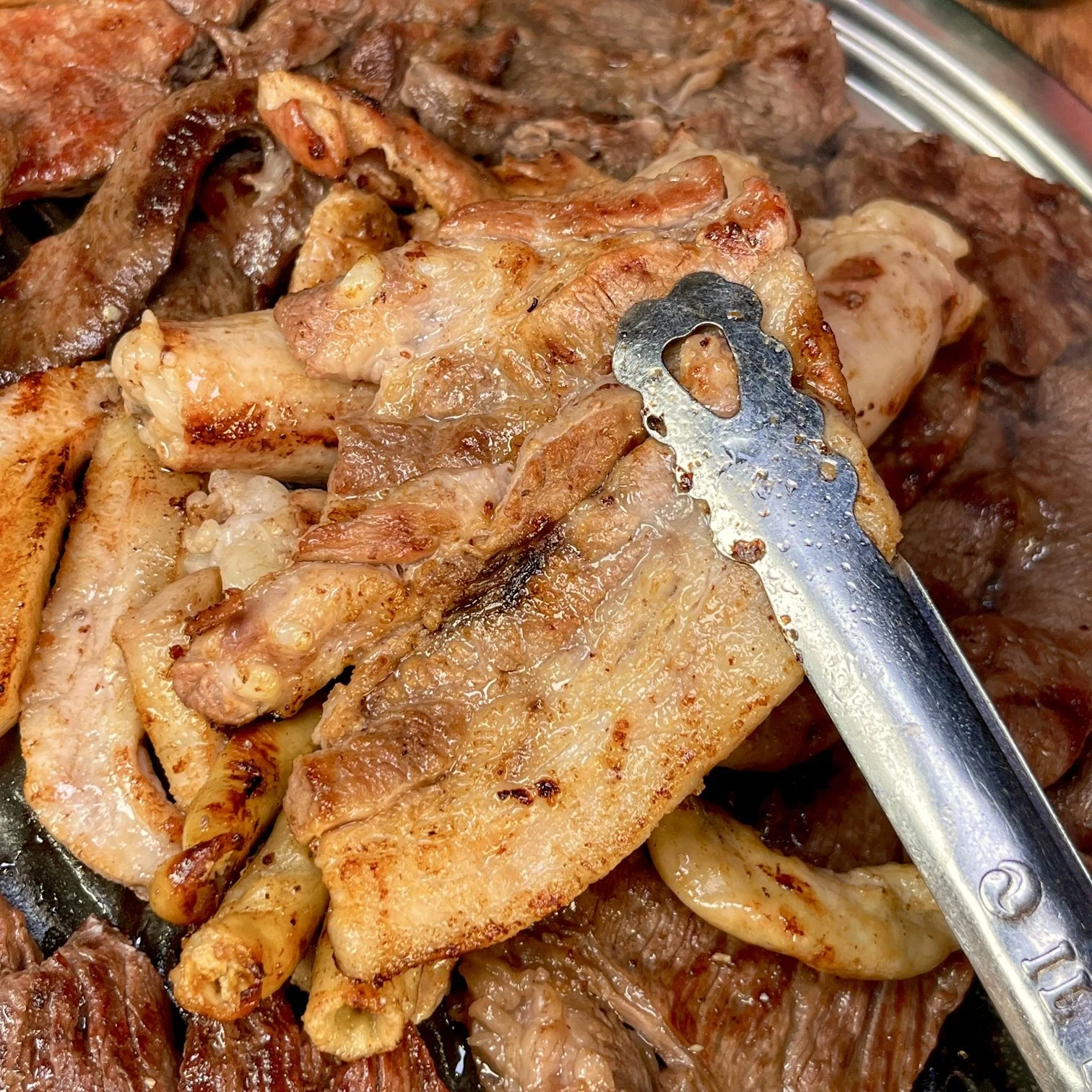
At some point in almost every traveler’s life, this thought happens:
“BBQ is BBQ… right?”
You see grilled meat. You smell smoke. There’s fire involved. How different can it really be?
Then you sit down at a Korean BBQ restaurant in Seoul, the grill lights up in front of you, raw meat arrives at the table, side dishes start multiplying, someone hands you lettuce, garlic, and sauce, and suddenly you realize—this is not the BBQ you thought you knew.
Despite sharing the same name, BBQ and Korean BBQ are not variations of the same cuisine. They are built on completely different ideas about cooking, eating, time, and even social interaction.
Understanding the difference doesn’t just make you a better diner. It makes the experience more fun. And if you’re eating Korean BBQ in places like Myeongdong, where options are endless, knowing what you’re actually getting helps you choose the right restaurant—especially if it’s your first time.
So let’s settle this properly.
First Things First: What Does “BBQ” Even Mean?
The confusion starts with the word itself.
In much of the Western world—especially the U.S., Australia, and parts of Europe—BBQ means slow-cooked, smoke-heavy meat. Think brisket that takes 12 hours. Think ribs that fall apart when you touch them. Think backyard smokers, pitmasters, and debates about wood chips.
In Korea, BBQ means something entirely different. It’s not about smoke and time. It’s about fire, timing, and balance.
Same word. Different universe.
Western BBQ: The Religion of Time and Smoke
Western BBQ is patient. Almost stubbornly so.
The defining feature of Western BBQ isn’t the grill—it’s time. Meat is cooked low and slow, often away from the diner, under the watchful eye of a pitmaster who treats temperature like sacred knowledge.
In this world:
Meat is transformed, not just cooked
Smoke is a primary flavor, not a background note
Sauces are bold and unapologetic
The diner waits while the chef works
When you order BBQ, the story has already happened. The meat arrives fully cooked, sliced, pulled, or stacked, usually with sauce and sides already chosen for you.
Western BBQ is about trust. You trust the pitmaster to have done everything right.
Korean BBQ: Fire at the Table, Decisions in Your Hands
Korean BBQ flips that idea completely.
Instead of waiting for the food, you become part of the cooking process. The grill is built into your table. Raw meat arrives in front of you. Heat is immediate. Decisions are constant.
Do you flip now or wait five seconds?
Do you dip or eat plain?
Do you wrap this bite or keep it simple?
At a place like Mongvely Korean BBQ in Myeongdong, the experience starts the moment the grill turns on. Meat arrives in stages, not all at once. You cook, eat, talk, drink, and repeat.
Korean BBQ is less about patience and more about presence.
➣ Click here to read : The Ultimate Guide to Korean BBQ in Myeongdong
Fire, Smoke, and Why Your Clothes Matter
One of the biggest misconceptions is that Korean BBQ is “smoky.”
Compared to Western BBQ, it’s not.
Western BBQ is defined by smoke. It clings to meat, clothes, hair, and memory. You expect to smell like BBQ afterward.
Korean BBQ uses fire differently. Heat is direct. Cooking time is short. Smoke exists, but it’s controlled—especially in modern restaurants with strong ventilation systems.
At Mongvely, for example, charcoal is used to add aroma, not dominance. You notice it, but it doesn’t take over. The goal is to let the meat speak first, not the fire.
This difference alone explains why Korean BBQ thrives in dense city centers like Seoul. You can eat BBQ at midnight and still walk into a café afterward without announcing your presence from across the street.
➣ Read also : Experience Real Charcoal Korean BBQ at Mongvely Myeongdong
Meat Cuts: Big and Tough vs Precise and Purposeful
Western BBQ and Korean BBQ choose meat for completely different reasons.
Western BBQ loves large, tough cuts. Brisket, pork shoulder, ribs—these cuts are chosen because they need long cooking times to become tender. Time and smoke are tools for transformation.
Korean BBQ prefers cuts that behave beautifully under high heat and short cooking times. Pork belly, beef short ribs, thin-sliced beef, marinated cuts—each is chosen for how it reacts on the grill in seconds, not hours.
At Mongvely, this precision is obvious. Beef and pork are cut to specific thicknesses, designed to cook evenly and quickly. Some cuts are meant to be eaten plain, others with sauce, others wrapped with vegetables.
Nothing is accidental. Every cut has a purpose.
➣ Read also : What Is Samgyeopsal? The Ultimate Guide to Korea’s Most Loved BBQ Pork Belly
The Sauce Situation: Loud vs Optional
If Western BBQ were a movie, sauce would be the main character.
Sauces are thick, bold, sweet, tangy, smoky, spicy—often all at once. They’re brushed onto meat, poured generously, and celebrated as part of the dish’s identity.
Korean BBQ takes a quieter approach.
Sauces are served on the side. Always. You choose when, how, or if to use them at all. One bite might be dipped in sesame oil and salt. The next in ssamjang. The next eaten completely plain.
This gives you control—and variety. A single cut of meat can taste different five bites in a row.
At Mongvely, the sauce and seasoning bar exists to support experimentation, not to dictate flavor.
➣ Read also : How to Eat Korean BBQ: Sauce Pairing Guide at Mongvely
Side Dishes: Supporting Act vs Co-Stars
In Western BBQ, side dishes are… sides. Nice to have, but not essential. Coleslaw, mac and cheese, cornbread—they play supporting roles.
In Korean BBQ, banchan are non-negotiable.
Pickled vegetables, kimchi, fresh greens, garlic, chili, sauces—these aren’t decoration. They exist to balance richness, reset your palate, and make it possible to eat grilled meat for an extended period without feeling overwhelmed.
This balance is one reason Korean BBQ meals tend to last longer. You’re not just eating meat. You’re constantly refreshing your taste buds.
Mongvely’s setup, especially its variety of sauces and sides, reflects this philosophy clearly.
➣ Read also : What Is Banchan? The Complete Guide to Korean Side Dishes at Mongvely
How You Actually Eat: Plates vs Ssam Culture
Western BBQ is straightforward. Meat goes on a plate. You eat it with utensils. Flavor comes from the meat and sauce.
Korean BBQ introduces ssam culture, and everything changes.
Instead of eating meat alone, you build a bite. Meat becomes one component among many—wrapped in lettuce or perilla leaves, paired with rice, garlic, sauce, and vegetables.
Each bite can be customized. Light. Heavy. Spicy. Clean. Rich.
This turns eating into a creative act. It’s also why Korean BBQ feels social and interactive, even among people who don’t know each other well.
At Mongvely, this culture is especially approachable for tourists, with clear layouts and familiar ingredients that make the process intuitive.
➣ Read also : The Ssam Culture of Korea: A Complete Guide to the Art of Wrapping Korean BBQ
The Pace of the Meal: Linear vs Looping
Western BBQ is linear. Food arrives. You eat. You’re done.
Korean BBQ is cyclical. Meat arrives, grills, is eaten, then arrives again. There’s no clear beginning or end. The meal expands or contracts based on the people at the table.
This pacing encourages conversation. Drinks linger. Time stretches.
It’s one of the reasons Korean BBQ is so popular for group dining, celebrations, and late-night meals—especially in areas like Myeongdong, where eating is part of the nightlife.
The Social Factor: Individual Plates vs Shared Responsibility
Western BBQ can be communal, but it’s often still individually portioned.
Korean BBQ is unapologetically shared.
The grill belongs to everyone. The meat belongs to everyone. Someone flips, someone watches, someone grabs lettuce. Decisions are made together.
This shared responsibility creates interaction, whether you want it or not. It breaks the ice. It turns dinner into an experience rather than a transaction.
Mongvely’s table layouts and menu structure are designed around this shared dynamic.
All-You-Can-Eat: Why It Works in Korean BBQ
Unlimited BBQ is rare in Western traditions. Slow cooking makes it impractical.
In Korean BBQ, it works because:
Meat cooks quickly
Portions are smaller
Everything is grilled fresh
At Mongvely, all-you-can-eat menus are structured to balance value with quality. You’re not eating pre-cooked leftovers. You’re grilling each round fresh, which keeps the experience engaging rather than overwhelming.
For travelers, this format offers both exploration and control—especially when trying Korean BBQ for the first time.
➣ Read also : Korean BBQ in Myeongdong: Where to Eat All-You-Can-Eat BBQ Like a Local
Atmosphere: Backyard Smokehouse vs Urban Energy
Western BBQ often feels rustic, casual, and outdoor-oriented.
Korean BBQ is deeply urban. It thrives in cities. It fits into busy shopping streets, late-night neighborhoods, and dense downtown areas.
Mongvely reflects modern Korean BBQ culture perfectly: clean interiors, efficient ventilation, multilingual menus, and a pace that suits both tourists and locals.
So… Which One Is Better?
Neither. And that’s the point.
Western BBQ is about surrendering control and trusting the pitmaster.
Korean BBQ is about participation, customization, and shared experience.
If you want deep smoke and long-cooked meat, Western BBQ wins.
If you want interaction, variety, and energy, Korean BBQ shines.
If you’re in Seoul—especially in food-heavy districts like Myeongdong—Korean BBQ isn’t just a meal. It’s part of the culture.
Why Travelers Fall in Love with Korean BBQ
For visitors, Korean BBQ offers something Western BBQ can’t:
Interactivity
Flexibility
Social connection
A sense of novelty that still feels comforting
Restaurants like Mongvely Korean BBQ in Myeongdong succeed because they balance authenticity with accessibility. You get the full experience without feeling lost.
Final Thoughts: Same Name, Different Worlds
BBQ and Korean BBQ may share a name, but they are built on different ideas about food, time, and togetherness.
One is slow and solitary.
The other is fast and shared.
Once you understand that difference, you stop comparing them—and start enjoying each on its own terms.
And if your journey leads you to a Korean BBQ table in Seoul, you’ll know exactly why it feels nothing like the BBQ you thought you knew.
Visit Us Now!
Mongvely Main Branch
Address: Myeongdong 8na-gil 9 3rd Floor
Opening Hours: 11:30 a.m. to 2:00 a.m.
Mongvely 2nd Branch
Address: Myeongdong 3-gil 44 2nd Floor
Opening Hours: 11:30 a.m. to 2:00 a.m.
Plan your visit → Book a Table
