

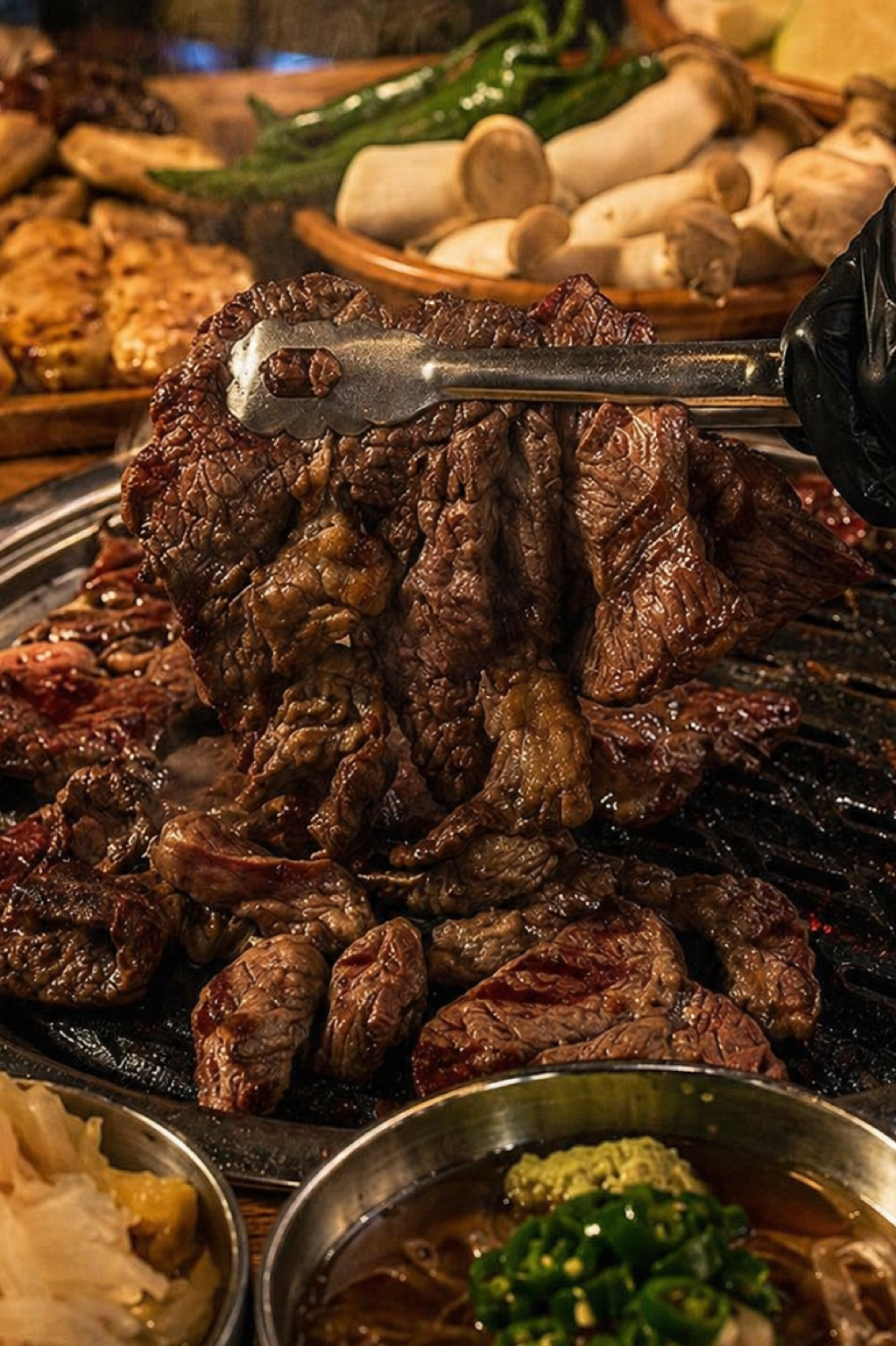
Korean BBQ is one of the most memorable dining experiences in Seoul, bringing together freshly grilled meat, traditional Korean side dishes, flavorful sauces, and the lively atmosphere of sharing a meal around a table. Whether you are visiting South Korea for the first time or returning to explore its food culture, enjoying Korean BBQ is often one of the highlights of a trip.
However, when searching for the best Korean BBQ in Seoul, visitors frequently encounter two different dining options: all-you-can-eat Korean BBQ buffets and traditional Korean BBQ restaurants that charge by portion. While both offer the experience of grilling meat at the table, their pricing, meat selections, dining formats, and overall value can differ considerably.
An all-you-can-eat Korean BBQ buffet in Seoul generally allows guests to enjoy multiple servings of meat for a fixed price, often within a designated dining period. Traditional Korean BBQ restaurants, on the other hand, typically charge according to the type and quantity of meat ordered, giving customers greater control over individual cuts and portion sizes.
Understanding these differences can help you choose the right restaurant for your appetite, budget, and dining preferences.
In this guide, we explain how Korean BBQ buffets work, how much Korean BBQ costs in Seoul in 2026, which meat cuts are worth trying, and when all-you-can-eat dining offers better value. We will also introduce Myeongdong Korean BBQ Mongvely, an all-you-can-eat beef and pork restaurant in central Seoul, as an example of what to expect from a fixed-price Korean BBQ experience.
What Is a Korean BBQ Buffet in Seoul?
A Korean BBQ buffet, commonly called muhan refill (무한리필) in Korean, is a restaurant where guests pay a set price to enjoy additional servings of selected meats and accompaniments during their meal.
Unlike traditional buffets that primarily serve fully prepared dishes, Korean BBQ buffets focus on the experience of grilling fresh meat directly at the dining table. Some establishments operate self-service meat stations, while others provide additional servings upon request. The precise system depends on the restaurant.
The main advantage of an all-you-can-eat Korean BBQ restaurant is the flexibility to explore different meat cuts without paying separately for every additional portion.
For example, diners might begin with pork belly, move on to thinly sliced beef brisket, and finish with marinated galbi or bulgogi. Instead of committing to a single meat selection, guests can experience different textures and flavors throughout the meal.
Many Korean BBQ buffets also provide a selection of banchan, vegetables, dipping sauces, and other Korean dishes, although the exact inclusions vary by restaurant and menu tier.
At Myeongdong Korean BBQ Mongvely, guests can enjoy unlimited beef and pork grilled over real charcoal, with four menu options offering different combinations of meat and additional dishes.
The restaurant uses a self-service and self-grilling format, allowing customers to select their preferred cuts and prepare them at the table.
For visitors who want to enjoy several types of Korean BBQ in one sitting, this approach offers a flexible way to explore Korean food.
What Is Traditional Korean BBQ, and How Is It Different?
Traditional Korean BBQ restaurants generally operate on an à la carte system, where diners order individual portions of beef, pork, or other meats.
Instead of paying one fixed price for unlimited servings, the final bill depends on the cuts selected, the number of portions ordered, and any additional dishes or drinks.
For example, a group visiting a traditional Korean BBQ restaurant might begin with two servings of samgyeopsal, add a portion of marinated galbi, and finish with cold noodles or soybean paste stew. Each additional order contributes to the total cost unless it is included in a set menu.
Many traditional Korean BBQ establishments also offer sharing sets that combine different cuts into one package. These can be particularly appealing to diners who want variety but do not necessarily need unlimited meat.
Another distinction is the level of service. Some premium Korean BBQ restaurants provide tableside grilling, with staff preparing the meat according to the characteristics of each cut. Other traditional establishments expect customers to grill the meat themselves, just as they would at an all-you-can-eat restaurant.
Neither format is automatically better. Traditional Korean BBQ can be the stronger choice for diners interested in a particular premium cut, a smaller meal, or a more service-oriented dining experience. All-you-can-eat Korean BBQ is often more appealing to those who prefer a wider selection of meat at a predictable price.
How Much Does Korean BBQ Cost in Seoul in 2026?
One of the most common questions among visitors planning a trip to South Korea is how much they should budget for Korean BBQ.
The answer depends on the restaurant, the meat selected, and whether you choose a fixed-price buffet or order individual portions.
Traditional Korean BBQ Prices in Seoul
At a regular Korean BBQ restaurant, prices are commonly displayed according to the weight of each serving. Pork belly, pork neck, marinated beef, and premium Korean beef can all fall into different price categories.
According to the Korea Consumer Agency's dining-out price information for September 2026, the average restaurant price of samgyeopsal in Seoul was approximately ₩21,321 per 200 grams, when standardized to that weight.
This gives visitors a useful reference point for understanding the cost of ordering grilled pork belly at a regular restaurant. However, actual prices can differ depending on the location, meat origin, restaurant concept, and serving size.
The cost of beef can vary even more significantly. Imported beef, marinated beef cuts, and premium Korean Hanwoo are not directly comparable in price, making it important to check exactly what each restaurant serves.
Side dishes, rice, noodles, alcoholic beverages, and other menu items may also affect the total bill.
For current regional dining-out price information, visitors can refer to the Korea Consumer Agency's official price information portal.
All-You-Can-Eat Korean BBQ Buffet Prices in Seoul
All-you-can-eat Korean BBQ restaurants operate differently because guests pay for access to a particular selection of meats rather than purchasing individual servings.
The price depends on the restaurant and may increase when additional beef cuts, grilled intestines, soups, noodles, or drinks are included.
At Myeongdong Korean BBQ Mongvely, our current 2026 menu offers four all-you-can-eat options:
Basic Set 1 — ₩31,700 per person
Our entry-level option includes unlimited beef and pork, together with access to our unlimited sauce and salad bar. This is ideal for diners who want to focus on charcoal-grilled meat without adding an extensive selection of other dishes.
Basic Set 2 — ₩34,700 per person
For guests who want to explore additional Korean BBQ specialties, Basic Set 2 includes unlimited beef, pork, and beef intestines, along with access to the sauce and salad bar.
Course 1 — ₩39,700 per person
Course 1 combines unlimited beef and pork with unlimited soybean paste stew, Korean cold noodles, rice, ramen, and soft drinks. It is particularly suitable for visitors who want to experience several Korean dishes alongside their barbecue.
Course 2 — ₩42,700 per person
Our most comprehensive option includes unlimited beef, pork, beef intestines, soybean paste stew, cold noodles, rice, ramen, and soft drinks, together with the sauce and salad bar.
All four options are available within our two-hour dining period.
For detailed information about the different courses, read our Mongvely Menu & Prices 2026 guide, or explore our official all-you-can-eat Korean BBQ menu.
Is an All-You-Can-Eat Korean BBQ Buffet Cheaper Than Regular Korean BBQ?
An all-you-can-eat Korean BBQ buffet is not necessarily cheaper for every diner. Its value depends largely on how much you eat, the variety of meats you want to try, and whether you would otherwise order additional portions.
Consider two people visiting a regular Korean BBQ restaurant and sharing a total of 400 grams of samgyeopsal. Using Seoul's September 2026 average of ₩21,321 per 200 grams, the meat alone would cost approximately ₩42,642 for the table.
By comparison, two people ordering Mongvely's Basic Set 1 at ₩31,700 each would pay ₩63,400 in total.
If both diners only wanted a modest portion of pork belly, the traditional restaurant could therefore be the more economical choice.
However, the comparison changes when the diners want larger portions or several different meat cuts.
If the same two guests were to order 600 grams of samgyeopsal at the surveyed average price, their meat bill would be approximately ₩63,963. That is already comparable to the cost of Mongvely's Basic Set 1 for two people, which also offers access to multiple beef and pork selections.
These calculations are illustrative rather than a direct comparison of identical meals. Real restaurant prices, serving sizes, meat quality, and included side dishes vary considerably.
Nevertheless, they demonstrate why all-you-can-eat Korean BBQ can become particularly attractive to visitors who want to try different meats or expect to order several additional servings.
The important question is not simply which restaurant has the lowest advertised price, but how much value the entire dining experience provides for the amount you expect to eat.
Korean BBQ Meat Guide: What Can You Eat at a Buffet?
One of the biggest attractions of Korean BBQ is the variety of available cuts. Different meats have distinct textures, fat distributions, marinades, and flavors, meaning that even a single barbecue meal can introduce visitors to several aspects of Korean cuisine.
While buffet selections vary, many restaurants specialize in familiar beef and pork cuts that are popular throughout South Korea.
Samgyeopsal — Korean Pork Belly
Samgyeopsal (삼겹살) is one of the most recognizable Korean BBQ dishes and a popular starting point for first-time visitors.
The meat contains alternating layers of fat and lean pork, creating a rich flavor and satisfying texture when grilled. As the fat renders over the heat, the outside develops a golden surface while the inside remains juicy.
Samgyeopsal is traditionally enjoyed with lettuce, garlic, ssamjang, and other Korean side dishes. The combination of smoky pork, crisp vegetables, and savory sauce creates one of the most familiar flavors associated with Korean BBQ.
At Mongvely, pork belly is part of our all-you-can-eat pork selection, allowing guests to enjoy additional servings within their chosen course.
Moksal — Korean Pork Neck
Moksal (목살), or pork neck, is another popular Korean BBQ cut known for its balance of lean meat and marbling.
Compared with pork belly, pork neck generally has a firmer bite and a slightly less fatty mouthfeel. It is a good option for diners who enjoy pork but prefer a meatier texture.
When grilled carefully over charcoal, pork neck develops a flavorful exterior while retaining moisture inside.
Alternating between samgyeopsal and moksal is an enjoyable way to appreciate the difference between two of Korea's most popular pork cuts.
Hangjeongsal — Korean Pork Jowl
Hangjeongsal (항정살), commonly known as pork jowl, offers a distinctive combination of fine marbling and springy texture.
This cut is prized for its rich flavor and pleasantly chewy bite. It is particularly enjoyable when grilled until the exterior develops a light golden crust.
Visitors who usually order pork belly may find pork jowl an interesting alternative because its texture and fat distribution create a noticeably different eating experience.
Beef Brisket — Thinly Sliced Korean BBQ Beef
Beef brisket is another popular Korean BBQ option, particularly when served in thin slices.
Because the meat is sliced thinly, it cooks quickly on the grill and develops a savory flavor without requiring a long cooking time.
Brisket pairs well with sesame oil, salt, wasabi, and lighter dipping sauces that complement the natural taste of the beef.
It is also a practical choice for diners who want to alternate between richer pork cuts and lighter bites of beef.
Rib Eye and Rib Meat
Beef rib eye and rib meat offer richer flavors and more substantial textures, making them appealing selections for visitors who want to explore beef beyond thinly sliced brisket.
Rib eye is appreciated for its marbling and tenderness, while rib meat offers a more pronounced bite and savory flavor.
At Mongvely, our beef selection includes rib eye, rib meat, top blade, brisket, and other cuts, providing several options for guests to compare during their meal.
LA Galbi and Bulgogi — Marinated Korean BBQ Favorites
Not all Korean BBQ meat is served without seasoning. Marinated beef dishes are another essential part of Korean barbecue culture.
LA galbi (LA갈비) consists of short ribs sliced across the bone, commonly prepared with a sweet and savory marinade. As the meat cooks, the marinade caramelizes and creates a flavorful exterior.
Bulgogi (불고기) is another well-known Korean beef dish, typically featuring thin slices of meat seasoned with ingredients such as soy sauce, garlic, and sugar.
Both dishes are popular among international visitors who enjoy sweet-savory flavors, particularly those trying Korean cuisine for the first time.
For a more detailed comparison of these popular meat styles, explore our guide to Samgyeopsal vs Galbi vs Bulgogi: Which Korean BBQ Meat Should You Try?.
Korean BBQ Side Dishes: What Is Included Besides Meat?
Although grilled meat is the main attraction, Korean BBQ is rarely enjoyed on its own.
Traditional Korean side dishes, known as banchan (반찬), play an important role in balancing the richness of the meat and creating a more varied dining experience.
Depending on the restaurant, banchan may include kimchi, pickled vegetables, seasoned bean sprouts, leafy greens, and other small dishes.
A popular way to enjoy Korean BBQ is to prepare ssam (쌈), a Korean-style lettuce wrap. Diners place a piece of grilled meat inside a lettuce leaf, add a small amount of ssamjang or another sauce, and combine it with garlic or vegetables before eating.
The contrast between warm grilled meat, fresh vegetables, and savory seasonings makes each bite more balanced.
At Mongvely, all four all-you-can-eat menu options include access to our unlimited sauce and salad bar.
Guests can explore familiar Korean BBQ accompaniments such as sesame oil, ssamjang, and wasabi, as well as a wider selection of seasonings and dipping sauces.
These include options such as cumin, curry seasoning, cheese powder, onion sauce, and other flavorful combinations that allow visitors to customize their barbecue experience.
For guests unfamiliar with Korean side dishes, our complete guide to Korean banchan explains how these dishes complement grilled meat.
You can also discover different meat and seasoning combinations in our Korean BBQ sauce pairing guide.
What About Rice, Ramen, Cold Noodles, and Korean Stews?
One important difference between Korean BBQ restaurants is whether additional Korean dishes are included in the menu price.
At many traditional Korean BBQ restaurants, rice, naengmyeon, and stews may be ordered separately, although some establishments include selected dishes with their meat sets.
All-you-can-eat restaurants can also follow different policies. Some focus primarily on unlimited meat, while others offer larger course menus that include additional dishes.
At Mongvely, guests selecting Course 1 or Course 2 can enjoy unlimited rice, ramen, cold noodles, soybean paste stew, and soft drinks alongside their beef and pork selections.
Doenjang jjigae, or Korean soybean paste stew, is especially popular during barbecue meals because its savory broth complements the richness of grilled meat.
Naengmyeon, or Korean cold noodles, provides a refreshing contrast. The chilled noodles are commonly enjoyed toward the end of a barbecue meal, particularly after eating richer pork or beef cuts.
Korean ramen offers another comforting option, especially for visitors who enjoy pairing grilled meat with a warm, flavorful noodle dish.
For diners who want to experience Korean BBQ alongside several familiar Korean dishes, choosing a course that includes these items can provide additional variety without ordering everything separately.
However, visitors who prefer to focus entirely on grilled meat may find that a basic all-you-can-eat set is sufficient.
All-You-Can-Eat Korean BBQ vs Regular Korean BBQ: Which Should You Choose?
Choosing between a Korean BBQ buffet and a traditional restaurant comes down to what you want from the meal.
Choose an All-You-Can-Eat Korean BBQ Buffet If You Want Variety
If your goal is to sample several beef and pork cuts during one meal, an all-you-can-eat Korean BBQ restaurant may be the more suitable choice.
Instead of deciding in advance how many portions to order, you can explore different textures and flavors at your own pace.
This is particularly appealing to first-time visitors who may be unfamiliar with Korean meat names and do not yet know which cuts they prefer.
A fixed-price menu also makes budgeting easier, especially when dining with friends or family.
Choose Regular Korean BBQ If You Prefer Specific Premium Cuts
Traditional Korean BBQ restaurants may be a better fit for diners seeking particular cuts of beef, premium Hanwoo, specialized aging techniques, or a more curated meal.
Some establishments focus on a limited selection of carefully prepared meat, with staff providing recommendations and grilling assistance.
The à la carte format can also be more economical when you have a smaller appetite or only want one or two portions.
Rather than assuming that one dining format is always superior, it is worth comparing the specific restaurant menus, meat selections, and services.
Consider Your Group Size and Appetite
Korean BBQ is traditionally a social meal, making both formats popular for couples, families, friends, and larger gatherings.
For groups with different preferences, an all-you-can-eat menu can simplify ordering because guests can enjoy a range of included meats rather than agreeing on every individual portion.
However, it is important to confirm whether a restaurant requires everyone at the same table to choose the same menu tier, whether there is a minimum number of diners, and how long the dining period lasts.
If you are travelling alone, check whether solo dining is permitted before visiting, as some Korean BBQ restaurants have minimum-order or seating requirements.
Korean BBQ Dining Tips for First-Time Visitors to Seoul
If this is your first Korean BBQ experience, a few simple dining tips can help you enjoy the meal more comfortably.
Start With Smaller Portions and Try Different Cuts
One of the benefits of an all-you-can-eat Korean BBQ restaurant is the opportunity to sample different meats. Rather than filling the grill immediately, begin with a smaller selection and explore the differences between pork belly, beef brisket, pork neck, and marinated meats.
This allows you to discover your favorites before returning for additional servings.
Pay Attention to Cooking Times
Different cuts require different grilling times.
Thinly sliced beef brisket cooks quickly, while thicker pork cuts generally need more time to cook thoroughly.
Avoid overcrowding the grill, and use separate utensils for raw and cooked meat to prevent cross-contamination. Make sure pork is fully cooked before eating, and ask restaurant staff for assistance if you are uncertain about preparing a particular cut.
Experiment With Korean BBQ Sauces
Korean BBQ offers many different flavor combinations, and sauces can change the way a familiar meat tastes.
For example, pork belly pairs well with traditional ssamjang and lettuce, while beef brisket can be enjoyed with sesame oil and salt. More adventurous diners may enjoy trying cumin, curry, or cheese seasoning with different grilled cuts.
Trying several combinations is part of the appeal of Korean BBQ, particularly at restaurants with self-service sauce stations.
Save Room for Korean Side Dishes
It can be tempting to focus entirely on meat, especially when visiting an all-you-can-eat restaurant.
However, combining your barbecue with kimchi, lettuce wraps, pickled vegetables, and traditional Korean dishes provides a more complete experience.
If your course includes cold noodles or soybean paste stew, consider enjoying these alongside the grilled meat rather than waiting until you are completely full.
Check the Time Limit and Restaurant Policies
Many Korean BBQ buffets operate within a fixed dining period, and some have additional rules concerning leftovers or final orders.
At Mongvely, guests have a two-hour dining period beginning when they are seated.
Planning your visit around the restaurant's dining policy helps you enjoy the experience without feeling rushed.
For more guidance, read our beginner's guide to Korean BBQ.
Where to Find an All-You-Can-Eat Korean BBQ Buffet in Myeongdong, Seoul
For visitors staying in central Seoul, Myeongdong is a convenient area to enjoy Korean BBQ before or after exploring the city.
Known for its shopping streets, skincare stores, cafés, and tourist attractions, Myeongdong is one of the most popular neighborhoods among international travelers.
Its central location also makes it accessible from areas such as Seoul Station, Dongdaemun, City Hall, and Euljiro.
Myeongdong Korean BBQ Mongvely operates two all-you-can-eat Korean BBQ branches in the neighborhood, offering unlimited beef and pork with real charcoal grilling.
Our restaurant focuses on providing a flexible dining experience where guests can select different meat cuts, explore Korean BBQ sauces, and enjoy a meal at a clearly stated menu price.
Mongvely Main Branch — Near Myeongdong Station
Our main branch is located at 3rd Floor, 9 Myeongdong 8na-gil, Jung-gu, Seoul, South Korea, above Olive Young.
The restaurant is conveniently located near Myeongdong Station on Subway Line 4, making it an accessible option for visitors exploring Myeongdong's central shopping streets.
Mongvely Second Branch — Near Euljiro-1-ga Station
Our second branch is located at 2nd Floor, 44 Myeongdong 3-gil, Jung-gu, Seoul, South Korea, above Ssada Gimbap.
This location is convenient for visitors arriving from Euljiro-1-ga Station on Subway Line 2 and exploring the northern side of Myeongdong.
Both branches are open daily from 11:30 AM until 2:00 AM, without a separate afternoon break.
This makes Mongvely an option for lunch, afternoon dining, dinner, or a late-night Korean BBQ meal after shopping and sightseeing.
Our restaurants generally welcome walk-in guests, while advance group reservations for six or more guests are available at our second branch, subject to confirmation. Solo seating is available on a limited basis at the second branch, subject to restaurant conditions and table availability.
For directions, contact details, and reservation information, visit our Mongvely locations and contact page.
If you are exploring Seoul in the evening, you can also read our guide to late-night Korean BBQ in Myeongdong, open until 2 AM.
Frequently Asked Questions About Korean BBQ Buffets in Seoul
1. What is the difference between a Korean BBQ buffet and regular Korean BBQ?
The main difference is the pricing structure. Korean BBQ buffets usually charge a fixed price for unlimited servings of selected meats during a designated dining period, while regular Korean BBQ restaurants generally charge for individual portions or meat sets. Buffets are useful for diners seeking variety and larger portions, whereas traditional restaurants can be preferable for smaller meals or specific premium cuts.
2. How much does an all-you-can-eat Korean BBQ buffet cost in Seoul?
Prices vary depending on the restaurant, neighborhood, meat selection, and additional dishes included. At Myeongdong Korean BBQ Mongvely, our November 2026 all-you-can-eat menu ranges from ₩31,700 to ₩42,700 per person. Guests can choose between unlimited beef and pork, additional beef intestines, or complete courses with noodles, stew, rice, ramen, and soft drinks.
3. Is all-you-can-eat Korean BBQ cheaper than ordering individual portions?
It depends on how much you plan to eat. Regular Korean BBQ may be cheaper for diners who only want a small portion of meat. However, an all-you-can-eat restaurant can offer better value for guests who want several servings or multiple meat cuts. Comparing the total meal cost, rather than just the starting price, gives a more accurate picture.
4. Do Korean BBQ buffets in Seoul include both beef and pork?
Some all-you-can-eat Korean BBQ restaurants offer both beef and pork, while others specialize in only one type of meat or charge extra for certain selections. At Mongvely, all four menu options include unlimited beef and pork, with additional beef intestines available in selected sets.
5. Do Korean BBQ buffets include rice, noodles, and side dishes?
This depends on the restaurant and menu tier. Some Korean BBQ buffets include basic side dishes and vegetables, while rice, noodles, stews, and drinks may cost extra. At Mongvely, all four menu options include an unlimited sauce and salad bar. Our Course 1 and Course 2 additionally include unlimited rice, ramen, cold noodles, soybean paste stew, and soft drinks.
6. Is all-you-can-eat Korean BBQ good for first-time visitors to Seoul?
Yes. All-you-can-eat Korean BBQ can be a convenient introduction to Korean barbecue because it allows guests to sample several meats without ordering each portion separately. Visitors can explore familiar cuts such as samgyeopsal, beef brisket, and bulgogi while learning how to grill meat and enjoy traditional Korean side dishes.
7. How long can you stay at an all-you-can-eat Korean BBQ restaurant?
Dining limits vary, but many Korean BBQ buffets establish a fixed period for their unlimited menu. At Myeongdong Korean BBQ Mongvely, the dining period is two hours from the time guests are seated. Visitors should check each restaurant's policy before arriving.
8. Can I eat Korean BBQ alone in Seoul?
Solo dining policies differ by restaurant. Some Korean BBQ establishments require a minimum number of guests or meat portions, while others provide tables suitable for individuals. At Mongvely, limited solo dining is available at our second branch in Myeongdong, subject to seating availability and applicable dining restrictions.
9. Where can I find late-night all-you-can-eat Korean BBQ in Seoul?
Myeongdong Korean BBQ Mongvely operates two branches in central Seoul, both open daily from 11:30 AM to 2:00 AM. This makes the restaurant a convenient option for visitors looking for Korean BBQ after shopping, sightseeing, or evening activities. Guests arriving close to closing time should confirm the latest admission arrangements in advance.
10. Do I need a reservation for all-you-can-eat Korean BBQ in Myeongdong?
Many Korean BBQ restaurants welcome walk-in customers, although reservation policies vary. At Mongvely, guests visiting in smaller groups are generally welcome as walk-ins, subject to availability. Advance reservations for groups of six or more can be requested at our second branch, subject to confirmation. For the latest policies, please refer to our official Mongvely FAQ.
Final Thoughts: Is a Korean BBQ Buffet in Seoul Worth It?
Both all-you-can-eat Korean BBQ buffets and traditional Korean BBQ restaurants offer enjoyable ways to experience Korean food, but they appeal to different dining preferences.
Traditional Korean BBQ restaurants are particularly suitable for visitors who want specific cuts, premium meat selections, or smaller portions. Their pricing structure provides flexibility when ordering a limited amount of food, although the total bill can increase as additional servings and side dishes are added.
All-you-can-eat Korean BBQ restaurants offer a different advantage by allowing diners to explore various meats at a fixed price. For visitors who enjoy trying multiple beef and pork cuts, sharing a lively meal with friends, or experiencing Korean barbecue without repeatedly calculating the cost of additional portions, this format can provide excellent value.
At Myeongdong Korean BBQ Mongvely, we bring together unlimited beef and pork, real charcoal grilling, a wide range of sauces and seasonings, and four menu options starting from ₩31,700 per person.
With two convenient locations in Myeongdong and daily opening hours until 2:00 AM, our restaurant welcomes visitors looking to experience all-you-can-eat Korean BBQ in the heart of Seoul.
Whether you are planning your first Korean BBQ meal or returning to enjoy your favorite grilled meats, the most important part is finding a restaurant that matches your appetite, preferences, and expectations.
Explore our official Mongvely Korean BBQ menu, learn more about our menu prices and course options, or find your nearest Mongvely branch in Myeongdong before your visit.
