

What Is Hangang Ramen? Seoul’s Han River Ramyeon Culture and the Ramen Machine Experience at Mongvely
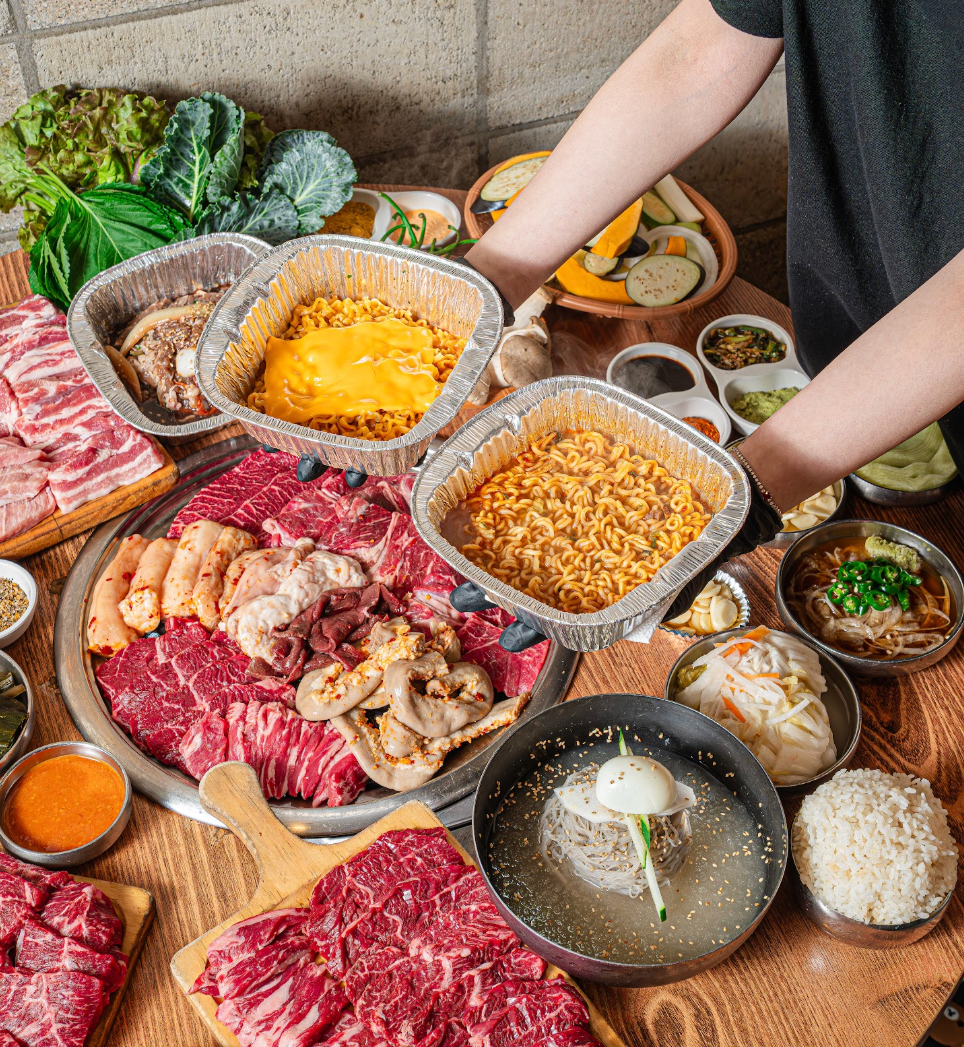
Hangang ramen is one of the simplest food experiences in Seoul, but it has become one of the most memorable. It is not a traditional royal dish, a luxury restaurant meal, or a complicated recipe. It is Korean instant ramyeon cooked with a special machine, usually near the Han River, then eaten casually with a river view.
That is exactly why people like it.
Seoul food culture is not only about famous restaurants. Some of the best food memories come from casual moments: eating street food in Myeongdong, sharing fried chicken by the river, buying snacks at a convenience store, grilling meat at a Korean BBQ table, or cooking ramyeon yourself with a machine. Hangang ramen belongs to this modern everyday side of Seoul.
At Mongvely in Myeongdong, we see Korean food culture as more than one dish. Korean BBQ is the main experience, but the full table also includes banchan, sauces, lettuce wraps, rice, soup, cold noodles, drinks, and ramen. That is why our in-store Hangang-style ramen machine fits naturally into the meal. It lets guests enjoy a familiar Seoul ramen machine experience indoors, while also having a full Korean BBQ dinner.
This guide explains what Hangang ramen is, where it came from, how it became part of Seoul’s food culture, how it connects to Korean instant ramyeon history, and how Mongvely brings the ramen machine experience into a Myeongdong Korean BBQ setting.
What Is Hangang Ramen?
Hangang ramen, more accurately called Hangang ramyeon, refers to Korean instant noodles cooked and eaten around the Han River in Seoul. The most iconic version is bought at a convenience store near a Han River park and cooked using a self-cooking ramyeon machine.
The usual experience is simple. You choose a packet of Korean ramyeon from the convenience store, place the noodles and seasoning into a special container, put the container on the cooking machine, and wait while the machine heats the noodles. After a few minutes, you eat the hot ramyeon near the river, often with a view of bridges, city lights, picnic mats, cyclists, and people relaxing outdoors.
The food itself is instant ramyeon. The setting is what turns it into a Seoul experience.
Hangang ramen became popular because it is easy, affordable, casual, and tied to one of Seoul’s most recognizable public spaces. It is not trying to be fancy. It is comfort food in the right place at the right time.
Ramen or Ramyeon: Which Word Is Correct?
Many people say “Hangang ramen” in English, but in Korea, the word is usually ramyeon or ramyun, written as 라면.
This matters because Korean ramyeon is not the same as Japanese ramen. Japanese ramen usually refers to a restaurant noodle dish with broth, toppings, and fresh or semi-fresh noodles. Korean ramyeon usually refers to instant noodles cooked quickly with soup powder, dried flakes, and sometimes extra ingredients such as egg, cheese, green onion, dumplings, rice cakes, or sausage.
So, when people say “Hangang ramen,” they are usually talking about Korean instant ramyeon eaten near the Han River. The phrase “Hangang ramen” is common because many English speakers use “ramen” as a general word for instant noodles. But if you want to be more accurate to Korean food culture, “Hangang ramyeon” is the better term.
For SEO, both terms matter. People search for “Hangang ramen,” “Han River ramen,” “Hangang ramyeon,” and “Seoul ramen machine.” They usually mean the same experience.
Where Did Hangang Ramen Come From?
Hangang ramen did not come from one old recipe, one chef, or one restaurant. It came from modern Seoul life.
The Han River, or Hangang, is one of Seoul’s most important leisure spaces. People go there to walk, cycle, picnic, watch sunsets, take photos, exercise, meet friends, and relax after work or school. Because people spend time there for hours, convenience stores around the river became an important part of the experience.
These convenience stores sell drinks, snacks, kimbap, ice cream, fried foods, beer, and instant ramyeon. Over time, cooking packet ramyeon by the river became a small ritual. The self-cooking ramyeon machine made the experience even more popular because it allowed people to cook noodles in a way that felt closer to pot-cooked ramyeon, rather than simply adding hot water to cup noodles.
That is the origin of Hangang ramen: Korean instant ramyeon culture, Han River park leisure, convenience stores, and self-cooking ramen machines coming together.
It is a modern Seoul food habit, not a traditional ancient dish. But that does not make it less meaningful. Many foods that define a city are not old. They become meaningful because people repeat them, share them, and attach memories to them.
The Deeper Origin: Korea’s Instant Ramyeon Culture
To understand Hangang ramen, you need to understand Korea’s love of instant ramyeon.
Korea’s first instant ramen, Samyang Ramen, was introduced in 1963. Since then, ramyeon has become one of Korea’s most familiar everyday foods. It is quick, affordable, filling, easy to customize, and strongly connected to home meals, convenience stores, camping, late-night eating, TV shows, military life, student life, and casual gatherings.
Ramyeon in Korea is not treated as only emergency food. It has its own culture. People debate brands, cooking time, water amount, toppings, spice level, and whether to add rice at the end. Some people prefer classic spicy ramyeon. Others like seafood ramyeon, jjajang ramyeon, mild ramyeon, cheese ramyeon, or ultra-spicy ramyeon.
Hangang ramen is one branch of this bigger culture. It takes something Koreans already love and places it in a public Seoul setting. The machine, the river, the convenience store, and the casual atmosphere make it feel like an activity instead of just a quick meal.
Why Does Hangang Ramen Taste Better?
Technically, Hangang ramen is still instant noodles. But food is never only about ingredients.
Hangang ramen tastes better because of the situation. You are usually outside. You may have walked along the river, rented a bike, sat on a picnic mat, watched the sunset, or spent time with friends. The noodles are hot, the broth is salty and spicy, and the river view makes the moment feel complete.
The machine also changes the experience. Packet ramyeon cooked with heat in a container can feel more satisfying than basic cup noodles. The broth feels fuller, the noodles cook more evenly, and the process itself is fun.
This is similar to Korean BBQ. Grilled meat is delicious, but the experience becomes stronger because of the table: the grill, the banchan, the sauces, the lettuce wraps, the people around you, and the act of cooking together. Hangang ramen works the same way. It is not only what you eat. It is how and where you eat it.
How to Eat Hangang Ramen by the Han River
The classic Hangang ramen experience is simple.
First, go to a Han River park area with a convenience store that has a ramyeon machine. Popular areas include Yeouido, Banpo, Ttukseom, Nanji, and other major Hangang park zones.
Next, choose your ramyeon. If you enjoy spicy food, classic Korean spicy ramyeon is a good choice. If you are sensitive to spice, choose a milder option. Korean instant noodles can be stronger than expected.
Then, follow the machine instructions. Usually, you place the noodles and soup powder into the container, put it on the cooker, and let the machine handle the water and cooking time. Some stores may have slightly different setups, so watch what others do or ask staff if needed.
Finally, eat the ramyeon while it is hot. Ramyeon does not wait well. The noodles soften if you leave them too long, so it is best to enjoy it right away.
Best Time to Try Hangang Ramen
The best time to try Hangang ramen is usually late afternoon, sunset, or evening.
Midday can be too hot in summer, especially in July and August. Evening feels better because the river breeze, city lights, and cooler temperature make the experience more comfortable. In spring and autumn, almost any time can work if the weather is good. In winter, hot ramyeon can taste especially comforting, but the Han River can feel very cold and windy.
Rainy days depend on the situation. Light rain can make hot ramyeon feel cozy if there is shelter. Heavy rain is less practical. If the weather is too hot, too rainy, or too cold, it may be better to enjoy a ramen machine experience indoors instead.
That is where Mongvely becomes useful.
Mongvely’s In-Store Hangang-Style Ramen Machine
At Mongvely in Myeongdong, guests do not need to go all the way to the Han River to try the ramen machine experience. Mongvely has a Hangang-style ramen machine in-store, so guests can cook their own ramen as part of the Korean BBQ meal.
This is an important difference from a normal self-service noodle corner. The ramen machine is part of modern Seoul food culture. It connects to the same experience people know from Hangang convenience stores: choosing ramyeon, cooking it yourself, and enjoying it casually with the people you are eating with.
At Mongvely, the experience is brought indoors and paired with Korean BBQ. Instead of eating ramyeon alone by the river, guests can cook ramen during a BBQ meal with grilled beef, pork, banchan, sauces, vegetables, lettuce wraps, rice, soybean stew, soft drinks, and cold noodles depending on the course.
This makes the meal more fun, especially for people who want to experience both Korean BBQ and Korean ramyeon culture in one place.
How Hangang Ramen Connects to Korean BBQ
At first, Hangang ramen and Korean BBQ may seem like two completely different foods. One is instant noodles cooked near the river. The other is grilled meat at a restaurant table.
But they share the same Korean dining logic: casual comfort, self-cooking, sharing, and eating according to the moment.
Hangang ramen is interactive because you cook it yourself using the machine. Korean BBQ is interactive because you grill the meat at the table. Hangang ramen is often eaten with friends outdoors. Korean BBQ is shared around a grill indoors. Both are relaxed, social, and built around participation.
This is why the ramen machine works well at Mongvely. Korean BBQ already has a self-service and table-cooking rhythm. Adding ramen gives guests another familiar Korean food experience inside the same meal.
After grilling meat, eating banchan, making lettuce wraps, and trying sauces like ssamjang, cooking ramen becomes a natural next step. It adds warmth, broth, noodles, and comfort to the table.
Why Ramen Works Well With Korean BBQ
Ramen works well with Korean BBQ because it gives a different kind of satisfaction.
Grilled meat is rich, smoky, savory, and filling. Banchan adds freshness, spice, acidity, and crunch. Lettuce wraps balance the meat with vegetables. Ramen adds hot broth, noodles, and a familiar Korean comfort-food feeling.
It is especially satisfying after eating grilled pork or beef because the spicy broth and chewy noodles create a strong contrast. Some guests like ramen in the middle of the meal. Others enjoy it toward the end as a warm finishing dish.
Ramen also fits the all-you-can-eat Korean BBQ style because it gives people more ways to enjoy the table. Not everyone wants only meat from start to finish. Some people like to alternate between grilled meat, banchan, rice, soup, noodles, and drinks.
At Mongvely, that variety is part of the appeal.
Hangang Ramen vs Mongvely’s Ramen Machine Experience
Hangang ramen and Mongvely’s ramen machine experience are connected, but they are not exactly the same.
Hangang ramen is about the outdoor river setting. You eat near the Han River, usually with a view, picnic atmosphere, and convenience-store mood.
Mongvely’s ramen machine experience is about bringing that self-cooking culture indoors and pairing it with a full Korean BBQ meal. You do not get the river view, but you get comfort, weather protection, seating, Korean BBQ, banchan, sauces, and a full restaurant table.
This matters in Seoul because weather changes everything. The Han River is great when the weather is good. But in summer heat, rainy season, winter cold, or late-night tiredness, an indoor ramen machine can be much more practical.
Mongvely gives guests a way to enjoy the fun part of Hangang-style ramen without depending on the weather.
When Mongvely’s Ramen Machine Is Especially Useful
Mongvely’s in-store ramen machine is especially useful in four situations.
First, it is useful on rainy days. Eating ramyeon outdoors near the river is not always comfortable when it rains. At Mongvely, guests can enjoy Korean BBQ and cook ramen indoors.
Second, it is useful in summer. Seoul summer can be hot and humid, and sitting outside with hot noodles is not always ideal. Eating indoors after shopping or sightseeing can feel much better.
Third, it is useful in winter. Hangang ramen can be fun in cold weather, but the river wind can be harsh. A warm BBQ restaurant gives a more comfortable way to enjoy ramen.
Fourth, it is useful for people staying in Myeongdong. If your hotel, shopping route, or evening plan is already around Myeongdong, you do not need to travel to the Han River just for the ramen machine experience.
A Seoul Food Plan: Hangang, Myeongdong, and Mongvely
A good Seoul food day should have rhythm.
You could spend the afternoon near the Han River, walk around Yeouido or Ttukseom, enjoy the river atmosphere, and try classic Hangang ramen if the weather is good. Later, you can return to Myeongdong for shopping, street lights, beauty stores, and Korean BBQ at Mongvely.
Or you could skip the river if the weather is bad and enjoy the ramen machine experience directly at Mongvely while having Korean BBQ.
Both plans make sense. Hangang ramen gives you the outdoor Seoul moment. Mongvely gives you the indoor BBQ version with more food, more comfort, and a fuller meal.
For people who want to understand Seoul food culture, the best approach is not to choose only one. Try ramyeon in different settings and notice how the mood changes.
What Tourists Often Get Wrong About Hangang Ramen
The first mistake is expecting Hangang ramen to be a gourmet noodle dish. It is instant ramyeon. The charm is the setting, the machine, and the casual Seoul atmosphere.
The second mistake is going to the Han River during bad weather just because it is on a list. If it is too hot, too rainy, or too windy, the experience may not be comfortable.
The third mistake is treating Hangang ramen as a full dinner after a long day. It can work as a light meal, but many people still need proper food later.
The fourth mistake is choosing a noodle that is too spicy. Korean ramyeon has many options, and not all of them are beginner-friendly.
Is Hangang Ramen Spicy?
Hangang ramen can be spicy, but it depends on the ramyeon you choose.
Many Korean ramyeon brands are spicy or at least mildly spicy. Others are seafood-based, beef-based, jjajang-style, creamy, cheese-friendly, or milder. The machine does not decide the spice level. The packet you choose does.
If you are sensitive to spicy food, choose carefully. If you enjoy spice, Korean ramyeon has many strong options. At a restaurant setting like Mongvely, ramen can also be balanced with grilled meat, banchan, vegetables, and drinks.
Is Hangang Ramen Worth Trying?
Yes, Hangang ramen is worth trying if you understand what it is.
It is not famous because it is rare or complicated. It is famous because it captures a real Seoul habit: taking something ordinary and making it memorable through setting, convenience, and shared experience.
If the weather is good, eating ramyeon by the Han River is a fun Seoul activity. If the weather is not good, or if you want a fuller meal, Mongvely’s in-store ramen machine gives you a practical indoor version connected to Korean BBQ.
That is the main point. Hangang ramen is not only about noodles. It is about how Seoul eats casually.
Final Thoughts: What Is Hangang Ramen?
Hangang ramen is Korean instant ramyeon cooked with a self-cooking machine and usually eaten near the Han River in Seoul. It grew from Korea’s instant ramyeon culture, Han River leisure culture, and convenience stores around the river.
Its deeper background connects to Korea’s long love of instant ramyeon, which began with the introduction of Korea’s first instant ramen in 1963. Over time, ramyeon became part of everyday Korean food culture, and the Han River machine version became one of Seoul’s most recognizable casual food experiences.
At Mongvely in Myeongdong, we bring that ramen machine experience indoors. Guests can enjoy all-you-can-eat Korean BBQ with beef, pork, banchan, sauces, vegetables, and table grilling, while also cooking ramen with our in-store Hangang-style ramen machine.
That connection is what makes the experience special. Hangang ramen shows the casual riverside side of Seoul. Mongvely’s ramen machine shows how that same self-cooking ramyeon culture can become part of a full Korean BBQ meal.
For anyone trying to understand Seoul food culture, both experiences matter. One is by the river. One is at the BBQ table. Both show why Koreans love food that is warm, shared, casual, and fun to cook yourself.
FAQ: What Is Hangang Ramen?
What is Hangang ramen?
Hangang ramen is Korean instant ramyeon cooked with a self-cooking machine and usually eaten near the Han River in Seoul. It is popular because it combines hot ramyeon with the casual outdoor atmosphere of Hangang parks.
Where did Hangang ramen come from?
Hangang ramen came from Seoul’s Han River park convenience-store culture. Convenience stores near the river began offering ramyeon and self-cooking machines, making it easy for people to cook packet noodles and eat them by the river.
Is Hangang ramen traditional Korean food?
Hangang ramen is not an ancient traditional dish. It is a modern Seoul food experience based on Korean instant ramyeon, convenience stores, and Han River leisure culture.
Why is Hangang ramen popular?
It is popular because it is simple, affordable, easy to cook, and connected to the Han River view. The experience feels casual, local, and very Seoul.
How do you cook Hangang ramen?
You choose a packet of ramyeon, place the noodles and seasoning into a special container, put it on the machine, and let the machine cook it with hot water and heat.
Is Hangang ramen different from cup noodles?
Yes. Hangang ramen is usually packet ramyeon cooked with a machine, while cup noodles are usually prepared by adding hot water. Machine-cooked ramyeon often feels closer to pot-cooked noodles.
Where can I eat Hangang ramen in Seoul?
The classic place is a convenience store around a Han River park, such as Yeouido, Ttukseom, Banpo, Nanji, or other major Hangang areas.
Does Mongvely have Hangang ramen?
Mongvely has a Hangang-style ramen machine in-store, so guests can cook their own ramen during their Korean BBQ meal. It is not the same as eating outdoors by the Han River, but it brings the self-cooking ramen machine experience into an indoor Myeongdong BBQ setting.
How does Hangang ramen relate to Mongvely?
Hangang ramen shows Korea’s love of self-cooked ramyeon in a casual setting. Mongvely connects this culture to Korean BBQ by offering an in-store ramen machine alongside grilled beef, pork, banchan, sauces, vegetables, and table grilling.
Can I eat ramen with Korean BBQ?
Yes. Ramen pairs well with Korean BBQ because it adds hot broth, noodles, spice, and comfort to grilled meat, banchan, lettuce wraps, rice, and sauces.
Is Hangang ramen good in summer?
It can be good in summer, especially in the evening. During the hottest part of the day, an indoor ramen machine experience may be more comfortable.
Is Hangang ramen good on rainy days?
Light rain can make hot ramyeon feel cozy, but heavy rain is not always practical. On rainy days, Mongvely’s indoor ramen machine is a more comfortable way to enjoy the self-cooking ramen experience.
Where is Mongvely?
Mongvely is in Myeongdong, with a main branch near Myeongdong Station and a second branch near Euljiro 1-ga Station.
What time is Mongvely open?
Mongvely is open daily from 11:30 AM to 2:00 AM.
Is Mongvely good after visiting Hangang?
Yes. After visiting the Han River, Mongvely is a practical dinner stop in Myeongdong for all-you-can-eat Korean BBQ, banchan, sauces, vegetables, table grilling, and ramen machine experience.
Visit Us Now!
Mongvely Main Branch
Address: Myeongdong 8na-gil 9 3rd Floor
Opening Hours: 11:30 a.m. to 2:00 a.m.
Mongvely 2nd Branch
Address: Myeongdong 3-gil 44 2nd Floor
Opening Hours: 11:30 a.m. to 2:00 a.m.
Follow us on Instagram: @kbbqmongvely
