

What Is Naengmyeon? A First-Timer’s Guide to Korea’s Most Refreshing Noodles
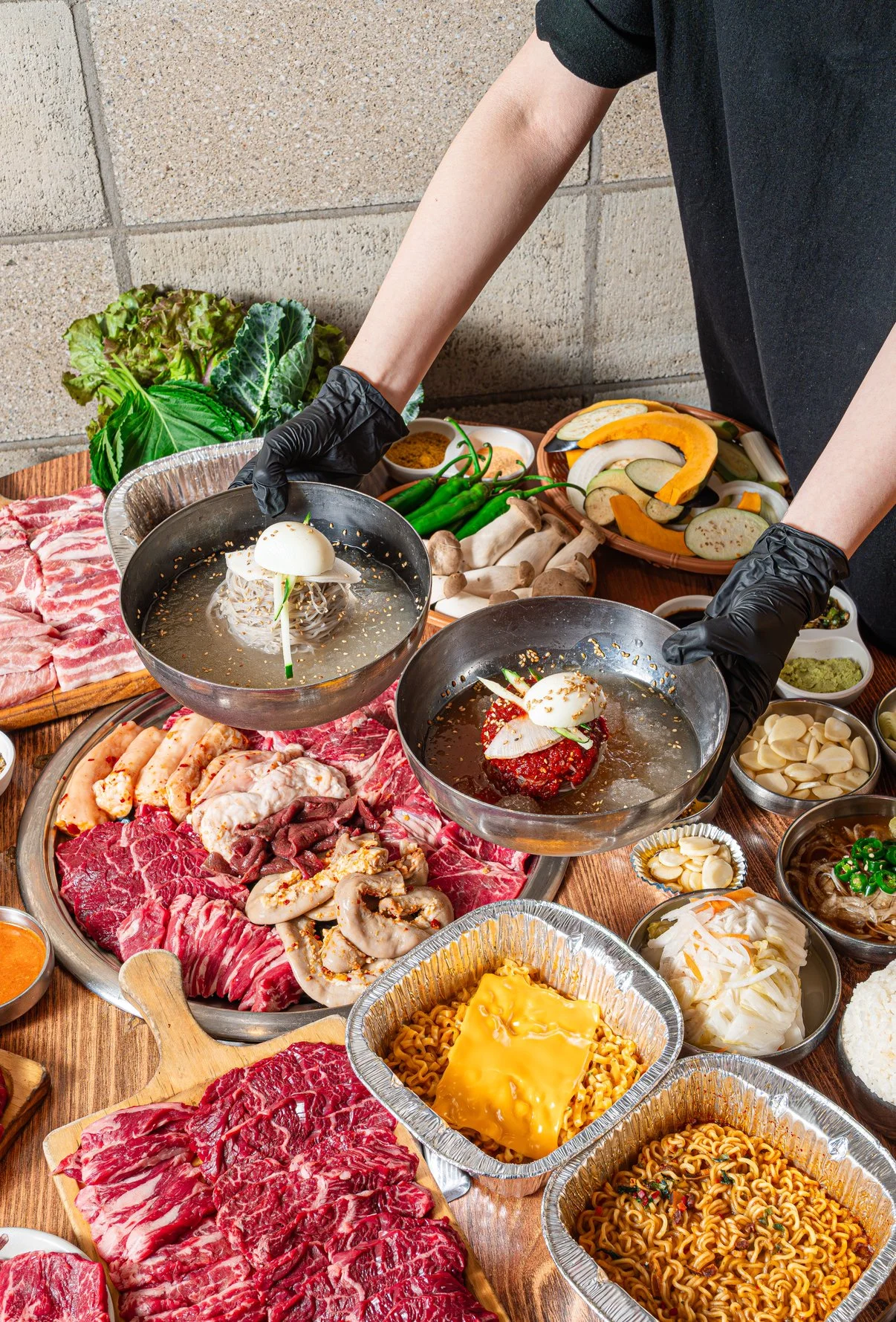
If Korean BBQ is the fire, naengmyeon is the ice.
At Mongvely, we see it every day: guests finishing sizzling grilled meat, slightly overwhelmed by the richness, then hesitating when they see a bowl of cold noodles arrive at the table. One bite later, everything clicks.
Naengmyeon is not just a cold noodle dish. It is balance, reset, and tradition—and for many Koreans, it is the only correct way to end a proper BBQ meal.
This guide explains exactly what naengmyeon is, where it comes from, how to eat it, and why it pairs so perfectly with Korean BBQ—especially for first-timers visiting Korea.
What Is Naengmyeon?
Naengmyeon (냉면) literally means “cold noodles.”
It is a Korean noodle dish served ice-cold, traditionally in either a chilled broth or a spicy sauce.
The noodles are long, thin, and springy, made primarily from buckwheat (sometimes blended with sweet potato or arrowroot starch). They are intentionally chewy and often served uncut, symbolizing longevity and continuity.
Unlike many noodle dishes around the world, naengmyeon is not about warmth or comfort. It is about clean flavors, temperature contrast, and refreshment.
A Short History of Naengmyeon
Naengmyeon did not originate as a summer dish, which surprises most visitors.
Historically, it comes from North Korea—particularly Pyongyang and Hamhung—where it was eaten in winter. Cold weather allowed natural fermentation and preservation, and chilled dishes were common.
After the Korean War, refugees brought naengmyeon south, where it gradually evolved. In South Korea, it became lighter, clearer, and more widely enjoyed—especially during hot summers.
Today, naengmyeon is one of the most iconic Korean dishes, served everywhere from casual eateries to high-end restaurants.
The Two Main Types of Naengmyeon
Understanding naengmyeon starts with knowing its two core styles. If you’ve never had it before, this is the most important section.
Mul Naengmyeon (물냉면) – Cold Broth Naengmyeon
This is the classic version.
Served in an icy, tangy broth
Broth is typically made from beef stock, dongchimi (radish water kimchi), or a blend of both
Lightly sour, subtly savory, never heavy
Often topped with:
Sliced beef
Cucumber
Pickled radish
Half a boiled egg
Thin pear slices
Mul naengmyeon is clean, restrained, and refreshing. For first-timers, this is usually the safest and most approachable choice.
Bibim Naengmyeon (비빔냉면) – Spicy Mixed Naengmyeon
This version skips the broth.
Mixed with a spicy gochujang-based sauce
Bolder, sweeter, and hotter
Served with minimal liquid
Often garnished similarly but feels more intense
Bibim naengmyeon is for guests who enjoy spice and stronger flavors. It is less about refreshment and more about contrast.
Why Naengmyeon Is Traditionally Eaten With Korean BBQ
If you’re dining at Mongvely, there’s a reason we recommend naengmyeon after grilled meat.
Korean BBQ is rich:
Fatty cuts like pork belly
Charred edges
Salty marinades
Lingering smokiness
Naengmyeon does three things BBQ cannot:
Cuts through grease
The acidity resets your palate immediately.Cools your body
After heat from grills and spices, the cold temperature is deliberate.Cleans the finish
It leaves your mouth refreshed instead of heavy.
This pairing is so ingrained that many Koreans feel a BBQ meal is incomplete without it.
How to Eat Naengmyeon the Right Way (Yes, There Is a Way)
First-time diners often overthink naengmyeon. Here is the straightforward approach.
Step 1: Mix the Bowl
Even broth-based naengmyeon should be gently mixed. The flavors settle at the bottom.
Step 2: Add Vinegar and Mustard (Optional but Traditional)
You’ll find. vinegar and korean mustard (gyeoja) at our salad bar.
Add a little at a time. Naengmyeon is meant to be customized, but overpowering it ruins the balance.
Step 3: Slurp Without Apology
Naengmyeon noodles are elastic. Slurping is practical, not rude.
What Does Naengmyeon Taste Like?
This is the hardest question to answer, but the most important for tourists.
Naengmyeon is:
Mildly sour
Lightly savory
Clean, not salty
Cold enough to shock you at first
If you expect bold spice or heavy seasoning, you will miss the point.
Naengmyeon rewards attention, not intensity.
Why Tourists Sometimes “Don’t Get” Naengmyeon at First
At Mongvely, we’ve noticed a pattern.
Guests who struggle with naengmyeon usually:
Eat it before BBQ instead of after
Expect ramen-like warmth
Compare it to non-Korean cold noodles
Naengmyeon is subtle by design. Once you understand its role, it makes sense.
Is Naengmyeon Healthy?
Compared to many Korean dishes, naengmyeon is relatively light.
Lower in fat
Broth-based versions are especially lean
Buckwheat noodles are easier to digest for many people
Served with vegetables and minimal oil
That said, sodium levels vary by restaurant, and spicy versions can be higher in sugar. It is not a diet food—but it is far from heavy.
Seasonal Myths: Is Naengmyeon Only for Summer?
No.
While it is popular in summer, Koreans eat naengmyeon year-round—especially after BBQ. Heated dining rooms, charcoal grills, and rich meat make cold noodles welcome even in winter.
In fact, historically, it was a winter dish.
Naengmyeon at Mongvely: Why We Serve It This Way
At Mongvely, naengmyeon is not a side dish added as an afterthought.
We treat it as:
A palate reset
A closing course
A bridge between tradition and modern dining
Our naengmyeon is designed to pair with grilled beef and pork, not compete with it. Clean broth, balanced acidity, and proper noodle texture matter.
➣ Click here for link to MONGVELY MENU
Mul or Bibim: Which One Should You Choose?
If this is your first time:
Choose mul naengmyeon
If you enjoy spice and bold flavors:
Choose bibim naengmyeon
If you’re dining with others:
Order one of each and share
Why Naengmyeon Is a Cultural Experience, Not Just a Dish
Naengmyeon reflects something essential about Korean food culture:
Balance over excess
Contrast over uniformity
Ending strong, not heavy
It is not designed to impress instantly. It grows on you. Many Koreans disliked it as children and crave it as adults.
Visiting Myeongdong? Don’t Skip Naengmyeon
Myeongdong is often associated with street food and shopping, but a proper Korean meal includes structure:
Grilled meat
Shared sides
A clean finish
Naengmyeon is part of that structure.
If you’re exploring Korean food seriously, skipping it means missing context.
(Internal link opportunity: “What to Eat in Myeongdong: A First-Timer’s Guide”)
Final Thoughts from Mongvely
Naengmyeon is not flashy.
It is not loud.
It does not beg for attention.
But once you understand it, Korean BBQ feels incomplete without it.
At Mongvely, we serve naengmyeon because it completes the meal the way Koreans have done for generations. If you’re visiting Korea for the first time, let this be one dish you approach with curiosity—not expectation.
Sometimes, the coldest bowl leaves the strongest impression.
Visit Us Now!
Mongvely Main Branch
Address: Myeongdong 8na-gil 9 3rd Floor
Opening Hours: 11:30 a.m. to 2:00 a.m.
➢ Link to Mongvely Main Branch
Mongvely 2nd Branch
Address: Myeongdong 3-gil 44 2nd Floor
Opening Hours: 11:30 a.m. to 2:00 a.m.
➢ Link to Mongvely Second Branch
Follow us on Instagram: @kbbqmongvely
