

What Is the Difference Between Galbi and Bulgogi?
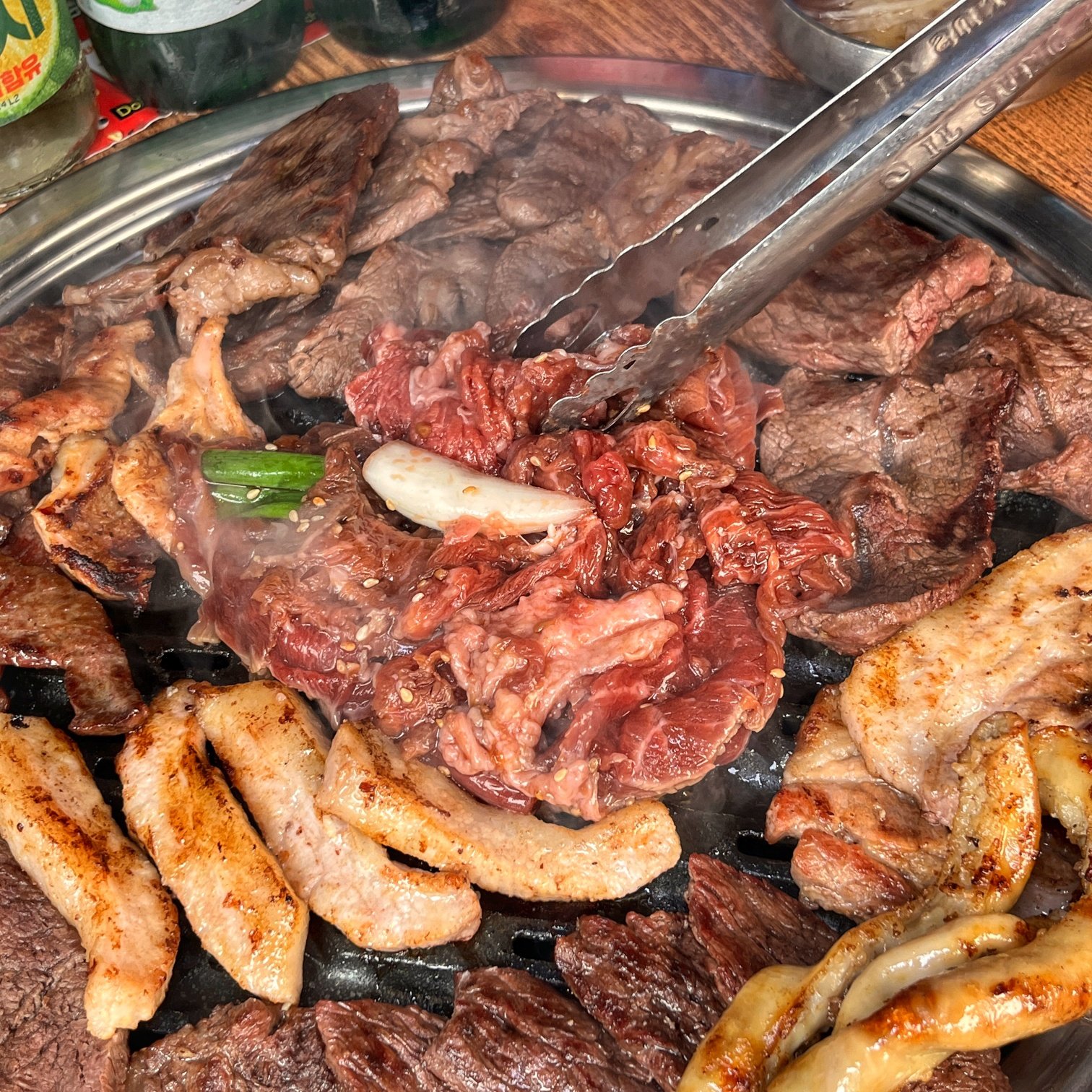
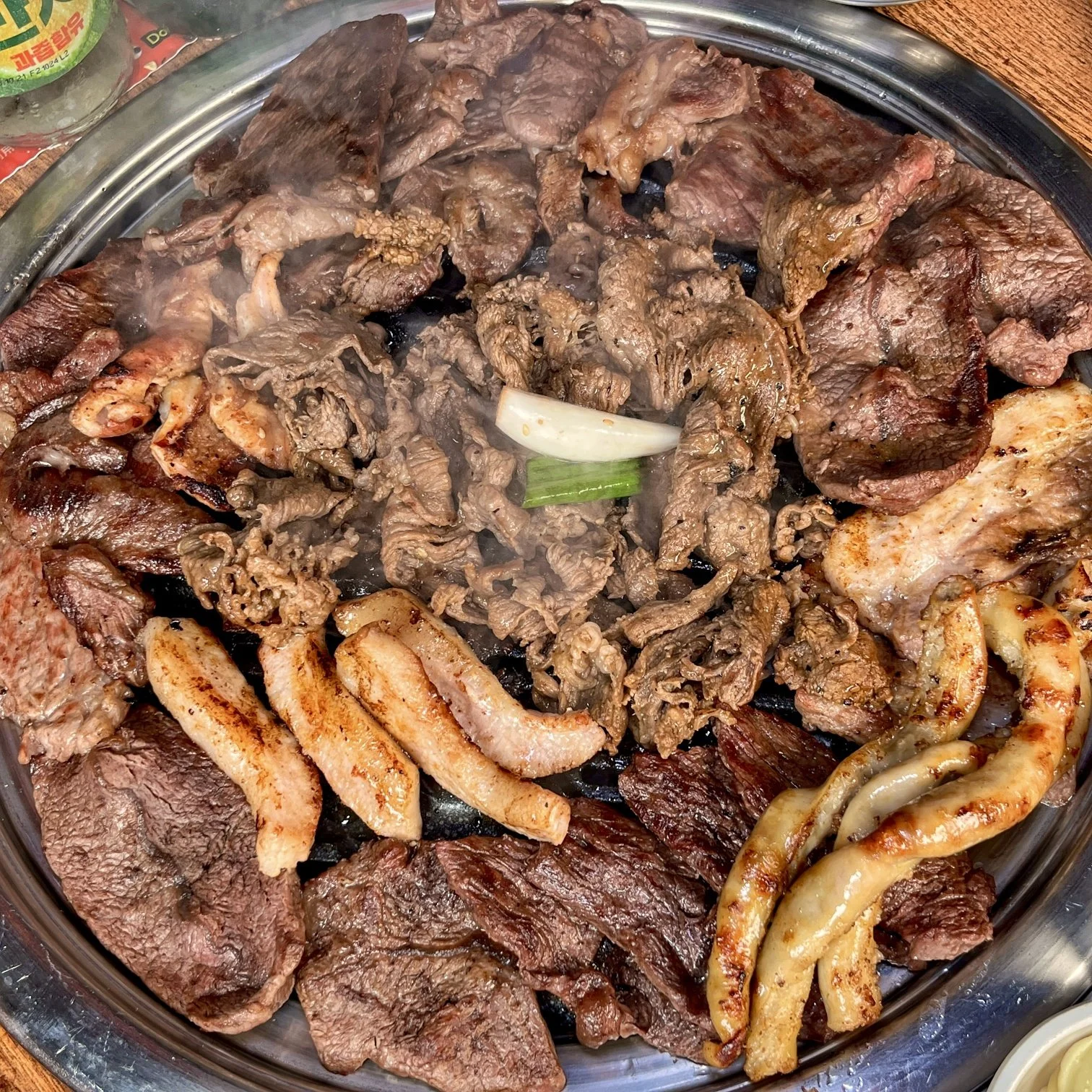
A Complete Guide to Two of Korea’s Most Famous BBQ Dishes
If you’re visiting Seoul and searching for Korean BBQ in Myeongdong, one of the most common questions we hear at Mongvely is simple:
“What’s the difference between galbi and bulgogi?”
They’re both marinated beef.
They’re both grilled.
They’re both sweet and savory.
But they are not the same — not in cut, not in texture, not in cooking style, and definitely not in overall experience.
As a Korean BBQ restaurant located just steps from Myeongdong Station, we serve guests from all over the world every day. And once you understand the difference between galbi and bulgogi, ordering becomes much easier — and much more satisfying.
Let’s break it down properly.
What Is Galbi?
The Meaning of Galbi in Korean BBQ
“Galbi” (갈비) literally means ribs in Korean. When you order galbi at a Korean BBQ restaurant, you’re typically getting beef short ribs, cut across the bone.
The most common type is: LA Galbi (flanken-cut short ribs)
The ribs are sliced thin across the bone, marinated in a soy-based sauce, and grilled over charcoal.
At Mongvely, galbi is one of the most popular choices for guests who want something rich, juicy, and slightly smoky.
The Cut of Meat
Here’s the key difference already:
Galbi = rib meat (short ribs, bone-in)
Contains marbling + connective tissue
Slight chew with deep beef flavor
Bone adds richness while grilling
Because it comes from the rib section, galbi has more fat and structure than bulgogi. That means stronger beef flavor and a more substantial bite.
How Galbi Is Marinated
Traditional galbi marinade includes:
Soy sauce
Sugar or Korean pear
Garlic
Sesame oil
Black pepper
Sometimes onion or apple
The marinade penetrates the meat but doesn’t overpower it. You still taste beef first.
When grilled over charcoal — which we use at Mongvely — the fat caramelizes and creates a smoky, slightly crispy edge.
That’s something you don’t get from bulgogi.
How Galbi Is Cooked
Galbi is grilled directly on a BBQ grill, typically over:
Charcoal (traditional)
Or gas grill in some restaurants
Because it’s bone-in and thicker than bulgogi, it takes slightly longer to cook.
It’s flipped a few times to prevent burning due to the sugar in the marinade.
When done properly, galbi should be:
Slightly caramelized outside
Juicy inside
Tender but not falling apart
If it’s too soft, it’s over-marinated. If it’s too tough, it wasn’t sliced correctly.
Good galbi balances both.
What Is Bulgogi?
The Meaning of Bulgogi
“Bulgogi” (불고기) translates to:
“Bul” = fire
“Gogi” = meat
It literally means fire meat.
But unlike galbi, bulgogi is not rib meat. It’s usually made from:
Thinly sliced ribeye
Or sirloin
The meat is sliced extremely thin — almost paper-thin.
The Texture of Bulgogi
Here’s the biggest difference:
Bulgogi is soft and tender
No bone
No chew
Almost melts in your mouth
Because it’s sliced so thin, it cooks very quickly — often in under a minute.
It’s designed to be easy to eat.
That’s why many first-time visitors to Korea feel more comfortable ordering bulgogi.
How Bulgogi Is Marinated
Bulgogi marinade is similar to galbi but usually sweeter and more pronounced.
It often includes:
Soy sauce
Sugar
Garlic
Sesame oil
Korean pear (for tenderness)
Sometimes honey
The thin slices absorb marinade very deeply. That’s why bulgogi tastes sweeter and more uniform throughout.
With galbi, you taste beef first.
With bulgogi, you taste marinade + beef together.
How Bulgogi Is Cooked
Unlike galbi, bulgogi is often cooked:
On a flat grill plate
Or in a shallow pan
Sometimes it’s grilled at the table.
Sometimes it’s pre-cooked in the kitchen.
Because it releases more liquid, bulgogi tends to be slightly juicy and saucy rather than charred.
You don’t get strong charcoal smokiness with bulgogi.
Galbi vs Bulgogi: Side-by-Side Comparison
1. Cut of Meat
Galbi → Short ribs (bone-in)
Bulgogi → Thinly sliced ribeye or sirloin
2. Thickness
Galbi → Thicker slices
Bulgogi → Very thin slices
3. Texture
Galbi → Juicy, slightly chewy, structured
Bulgogi → Soft, tender, easy to chew
4. Flavor Profile
Galbi → Beef-forward, smoky, caramelized edges
Bulgogi → Sweeter, more marinade-driven
5. Cooking Style
Galbi → Direct charcoal grilling
Bulgogi → Flat grill or pan cooking
FAQ : Which One Is Better for Ssam (Lettuce Wraps)?
Both can be eaten with ssam (lettuce wraps), but galbi performs better.
Why?
Because galbi holds its shape.
When you wrap it with:
Lettuce
Garlic
Ssamjang
Kimchi
It gives structure to the bite.
Bulgogi is softer and sometimes slips apart inside the wrap.
If you want that full Korean BBQ wrap experience, galbi is usually stronger.
FAQ : Which One Is More Popular in Myeongdong?
In tourist-heavy areas like Myeongdong, bulgogi is often ordered by first-time visitors because:
It’s easy to eat
No bones
Less intimidating
But regular Korean BBQ lovers and returning guests often choose galbi because:
It has stronger beef flavor
Better grill texture
More satisfying chew
At Mongvely, we see this pattern every day.
If someone wants a “classic Korean BBQ experience,” we usually recommend galbi.
If someone wants something lighter and very easy to enjoy, bulgogi works well.
FAQ : Is Galbi More Expensive Than Bulgogi?
Generally, yes.
Because:
It uses rib cuts
Includes bone
Has more marbling
Rib sections are premium parts of the cow.
Bulgogi can be slightly more affordable depending on the cut used.
In Myeongdong, pricing varies by restaurant, but galbi is typically considered the more premium option.
Nutritional Difference Between Galbi and Bulgogi
Let’s be honest.
Galbi contains more fat because it comes from ribs.
Bulgogi, depending on cut, can be slightly leaner — especially if made from sirloin.
However, both are marinated with sugar and soy sauce.
If you’re watching calories:
Choose leaner bulgogi
Or eat galbi but balance with vegetables and lettuce wraps
Korean BBQ is about balance, not restriction.
When Should You Choose Bulgogi?
Choose bulgogi if:
You prefer tender, soft meat
You don’t want to deal with bones
You like slightly sweeter flavor
You want something easier to chew
It’s approachable and very beginner-friendly.
When Should You Choose Galbi?
Choose galbi if:
You love strong beef flavor
You enjoy charcoal smokiness
You want the traditional Korean BBQ grill experience
You don’t mind bone-in meat
It’s more interactive and feels more “BBQ.”
Our Honest Recommendation at Mongvely
If it’s your first Korean BBQ experience in Seoul:
Get both.
Try galbi first.
Taste the charcoal.
Wrap it properly in lettuce.
Then try bulgogi.
Notice how soft and sweet it feels.
They’re not competitors.
They’re different expressions of Korean BBQ.
And once you try both side by side, the difference becomes obvious.
Final Answer: What Is the Real Difference Between Galbi and Bulgogi?
In simple terms:
Galbi = Rib meat, bone-in, smoky, richer, traditional grill experience
Bulgogi = Thin sliced beef, boneless, sweeter, softer, easier to eat
They share marinade roots, but they are structurally and texturally different.
If you’re searching for authentic Korean BBQ in Myeongdong and wondering which to choose, now you know exactly what you’re ordering.
And when you sit down at the grill, you’ll understand why Koreans don’t treat them as the same dish.
They may look similar on the menu.
But on the grill — and in your mouth — they tell two different stories.
Visit Us Now!
Mongvely Main Branch
Address: Myeongdong 8na-gil 9 3rd Floor
Opening Hours: 11:30 a.m. to 2:00 a.m.
Mongvely 2nd Branch
Address: Myeongdong 3-gil 44 2nd Floor
Opening Hours: 11:30 a.m. to 2:00 a.m.
Plan your visit → Book a Table
Follow us on Instagram → @kbbqmongvely
